
Start at 4 mm, Test 2–4 Classes Before Changing Your Yoga Mat
Most yogis do best with a 4 to 6 mm mat. Four millimetres suits balance and flow work. Five to six millimetres suits knees, hips, and sensitive joints. Travellers go thinner, 1.5 to 3 mm. Restorative and therapeutic sessions go thicker, 6 to 8 mm or more. Mats are available across this range.
TL;DR:
- Thinner mats (1.5 to 3 mm) are ideal for travelers and hot yoga but offer little joint cushioning, potentially affecting joints.
- The recommended all-round thickness range for most yoga styles is 4 mm, balancing stability and comfort for general practice.
- Increased cushion beyond 6 mm can reduce proprioception and stability, especially on hard floors, and may cause joint bottoming out.
- Dense natural rubber mats at 4 mm resist compression better than thicker foam mats, providing support without sacrificing stability.
- Testing pressure points by kneeling and pressing firmly can help determine if the mat bottoms out before purchase.
Table of Contents
- What yoga mat thickness ranges actually mean
- Why does thicker not always mean better?
- Which yoga mat thickness suits your practice style?
- How do you actually pick and test the right thickness?
- How do cork and natural rubber change the thickness equation?
- Which Crk mat matches your yoga mat thickness needs?
- What’s Crk’s honest take on chasing thickness?
- Sources
What yoga mat thickness ranges actually mean
Millimetres aren’t just a spec. They decide how your body reads the floor.
Ultra-thin mats (<3 mm) roll small and weigh little. Serious travellers pick these because they fit in a backpack, but they offer almost no cushioning on hard floors.
Ultra Portable, Flow mats (3 mm) keep your feet close to the ground. That’s the range REI points to for stable, flowing practice, since 1/8 inch (roughly 3 to 4 mm) gives balance poses a firm base and some joint protection.
All-round mats (4 mm) are the default for most practitioners. Multiple buyer guides land here as the sweet spot, and it’s the range where Kit Authority’s guidance suggests most people should start before adjusting up or down. These mats offer an ideal balance between comfort, stability and portability.
Comfort mats (5-6 mm) are the most comfortable mats and may sacrifice some stability and portability for joint protection and comfort. These are recommended if you do a lot of yin and restorative yoga at home.
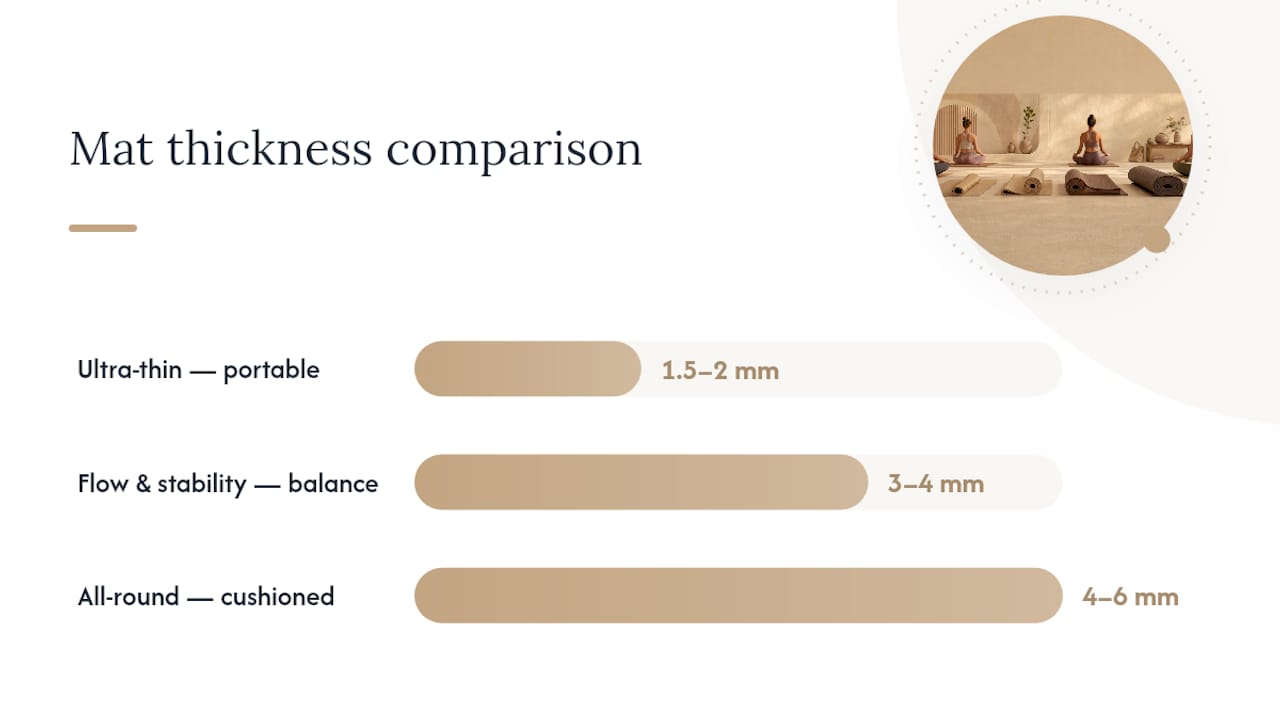
Mats thicker than 6 mm are rarely used for yoga practice. Very thick mats behave more like general fitness pads, cushioning well but offering little to no stability for standing or balancing postures.
| Range | Best for | Trade-off |
|---|---|---|
| <3 mm | Travel, studio rentals | Little joint cushioning |
| 3 mm | Vinyasa, flow, balance work | Firm, but less pressure relief |
| 4 mm | General practice, mixed styles | The practical middle ground |
| 5–6 mm | Yin, restorative, therapeutic | Softer footing, less balance feedback |
| >6 mm | Rarely used for yoga | Bulky, unstable in standing poses |
Why does thicker not always mean better?
More cushion sounds like an easy win. It isn’t.
Every millimetre you add between your foot and the floor changes what your nervous system feels. That feedback (called proprioception) tells your brain exactly where your foot sits and how much pressure to correct for. Pile on cushioning and that signal gets muffled, which is exactly why standing poses like tree or half moon get shakier on a plush mat. The Los Angeles Times frames this directly: thickness adds cushioning, but it can cost you stability in standing work.
Density matters just as much as the number on the spec sheet. A soft, low-density foam at 6 mm can not only be less stable, but also still let your kneecap or wrist bone press through to a hard floor, a problem called bottoming out. A denser natural rubber mat at 4 mm often resists this better than a cheap foam pad twice its thickness, according to Yogalith’s buyer research.
Two mats with identical stated thickness can perform completely differently once you load them with real body weight. Compression resistance, not the millimetre number, decides whether your joint hits the floor.
Pro Tip: Before buying, kneel on the mat in-store (or on a sample at home) and press your palm down hard, simulating a long plank or cat-cow hold. If you feel the floor through the padding, that mat will bottom out during class too.
Which yoga mat thickness suits your practice style?
Style and flooring change the calculation more than personal preference does.
- Vinyasa, power, and ashtanga: Stick to 3 to 5 mm. Fast transitions and standing balance need a stable base, not a plush one.
- Hot yoga: Grip strategy matters more than thickness here. Any-size mat paired with a towel handles sweat far better than more or less padding, or you can also look for a hot yoga grip surface, like cork or textured natural rubber.
- Yin and restorative: Go up to 5 to 6 mm. Long holds put sustained pressure on knees and hips, and that’s where extra cushion earns its place.
- Home practice on hard floors (tile, concrete): Choose 5 to 6 mm, or a denser 4 to 5 mm build, to avoid feeling the floor through the mat.
- Travel: 1.5 to 3 mm, layered over a hotel carpet or studio-provided mat when you need more give.
Sprung wood studio floors already absorb some shock, so a thinner mat works fine there. Concrete floors don’t forgive anything, which pushes the right choice toward 4 to 6 mm and a denser build.
How do you actually pick and test the right thickness?
Skip guesswork. Run this short process instead.
- Name your priority first. Joint comfort, balance and stability, or portability. Pick one as your main driver, or remember that 4mm is generally a great balance of all options if that's what you're looking for.
- Choose a starting range and commit to it for 2 to 4 classes. Don’t judge a mat off one session. Note how your knees, wrists, and balance feel each time.
- If joints still ache, don’t jump straight to a thicker mat. Try a denser mat at the same millimetre count first, since this significantly impacts how well the mat protects your joints. You can expect natural rubber mats to generally be higher density than TPE or plastic mats.
- If your balance feels off, go thinner or denser, not softer. Wobbly standing poses on a plush mat usually mean too much cushion, not too little.
Pro Tip: You can sometimes fold your mat or also use a knee pad or folded blanket to solve a single pressure point without changing your whole mat. Reach for targeted padding before you reach for a thicker mat, especially if you do a lot of vinyasa and standing balancing poses.
How do cork and natural rubber change the thickness equation?
Material changes what a millimetre actually delivers underfoot.
Natural rubber compresses less than synthetic foam at the same thickness, which is why a 3 to 4 mm rubber mat can feel more supportive than a thicker foam alternative. Cork adds a firm, textured surface on top of that rubber base, and it grips better the more you sweat on it, a rare material trait for hot practice.
- Natural rubber resists compression, helping a thinner mat avoid bottoming out under knees and wrists.
- Cork surfaces carry natural antimicrobial properties, cutting down the odour buildup common in synthetic foam mats.
- Alignment guides printed into the mat surface help you square your hands and feet without needing extra floor space or a thicker pad for stability cues.
- A denser natural rubber and cork base at 4 mm often outperforms a plush synthetic mat at 6 mm for grounded, controlled poses.
Which Crk mat matches your yoga mat thickness needs?
Once you know your target range, matching a mat is straightforward.
Travelling or need a stable base for flow? The Classic Mat, 3 mm pure natural rubber, keeps you close to the floor for vinyasa and balance work without adding bulk to your bag.
Prioritizing comfort for at-home practice? The Flowers Mat runs 5 mm thick, made from organic cork and recycled natural rubber, that's high density and supportive for sensitive joints, especially in long holds and practices like yin yoga and restorative yoga.
Want a recycled natural-rubber all-rounder with alignment cues built in? The Standard Mat runs 4 mm thick, made from organic cork and recycled natural rubber, with an alignment system printed into the surface to keep your stance square in standing poses. This mat gives you giving you the antimicrobial, grip-when-sweaty advantage cork offers along with solid compression resistance.
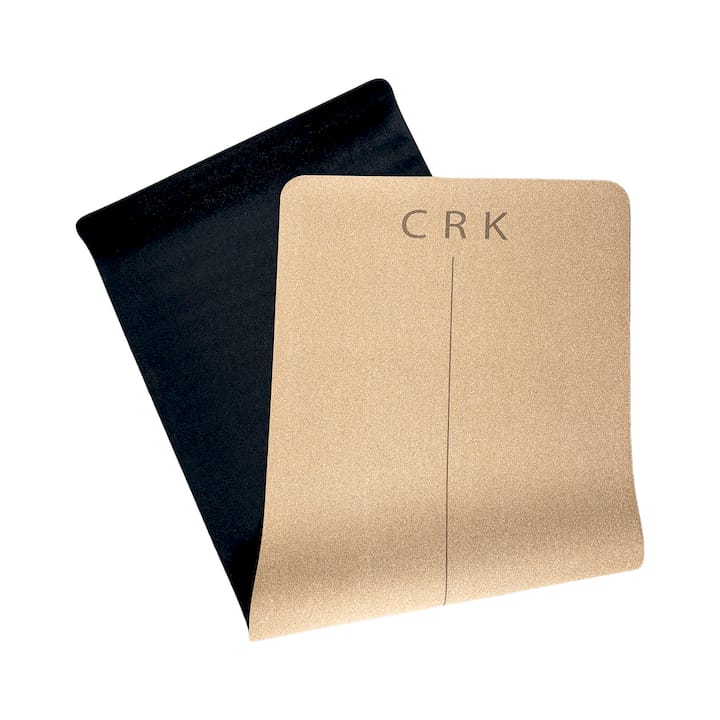
All three sit inside the ranges covered above rather than chasing an extra millimetre for its own sake. Browse the full lineup at the Crk store to compare thickness, material, and alignment features side by side, and pick the one that matches the priority you named in the decision tool above. If you’re building a broader home practice, Crk’s take on yoga’s popularity and its poses for desk-bound bodies are worth a read too. For wellness habits beyond the mat, Pure Blue’s take on daily wellness covers adjacent ground.
What’s Crk’s honest take on chasing thickness?
Most yogis overthink millimetres and underthink density. A denser natural rubber mat with solid compression resistance can outperform a thicker foam pad, and that gap matters more than the millimetre measurement alone.
Start at 4 mm if you’re unsure. Test it for a few classes before deciding you need more cushion. If your knees still complain, make sure you're using a high density mat before reaching for a thicker one, since extra thickness may not fix the discomfort, increase weight, and reduce stability in yoga.
Try one of the three ranges covered here, and consider contacting a provider directly if you’re still unsure which one fits your practice.
— Crk
Sources
- How to Choose a Yoga Mat
- Yoga Mat Guide: Choosing the Right Thickness, Grip, and Material - Los Angeles Times
- How to choose a yoga mat that fits your practice | Kit Authority
- Yoga Mat Thickness: The Definitive Buyer’s Guide 2026


