Yoga is having its moment - but is it really that great?

Since the popularity of the ancient practice, research surrounding yoga’s benefits has risen dramatically. Many studies have found that yoga can have tremendous, positive impacts on the immune system after just one session and it only increases with time and effort, which improves quality of life. But there are some downsides such as the quality of equipment and its surprising impact on health. So, do the benefits outweigh the costs?
Boosting the immune system
A recent study demonstrated that stretching for just 90 minutes in the day, increased the HBD-2 expression rate. HBD-2 is a marker for disease however when it increases because of yoga, it’s a good sign! This antimicrobial peptide destroys microbes and helps modulate inflammation, found in the skin, the lungs and the oral cavity, and it is one of the body’s best defence mechanisms.
Within just 10 days of yoga practice, studies show a decrease in inflammatory markers IL-6 and TNF-a, including in a study with 86 patients who all showed improvements to their chronic inflammatory disease. Considering that TNF-a and IL-6 often work together to increase inflammation, both triggers can become simultaneously dysregulated which leads to widespread, chronic inflammation, autoimmune disease and even cancer. It has even been found that higher levels of these signaling proteins increases death rates among those admitted to the hospital for pneumonia — so, let’s consider that 10-day yoga challenge to regulate inflammation!
Within just three months of regular yoga practice, the body ramps up its defences and increases anti-inflammatory glucocorticoid receptor (GR) activity. Adequate levels of GR are crucial for restoring balance following an immune response, and since homeostasis lowers the risk of disease — it’s safe to say that this protein is handy to have around, thanks to doing yoga!

This is just the tip of the iceberg when it comes to yoga’s myriads of health benefits! Looking beyond the immune system, there’s even more, including boosting mental health, wellbeing, mental clarity, focus, and the list goes on! It’s safe to say that this is an activity worth doing — or is it?
The health consequences of a toxic yoga mat
It is not the yoga practice itself that’s harmful but the equipment and the ambiance that may pose health risks. Imagine doing so much good for your body, meanwhile exposing yourself and the environment to hazardous chemicals! Your mat, and maybe even the incense or candles can all contribute to the downsides of yoga.
The mat that you choose can have a major impact on your health, especially for regular yoga practice. Take PVC. For example. While these mats have awesome features like closed-celled structure and no bad odours, they are frequently made with toxic chemicals, including forever chemicals. These chemicals are readily absorbed through the skin, especially when you’re hot and sweaty. The only defence is in hands and feet — think thicker skin and no fair follicles, which makes your plank and downward dog slightly less vulnerable to chemical the absorption.
Next on the dirty list is TPE, especially because people don’t assume there’s anything unsafe about it. TPE mats are incredibly popular, and this type of plastic is often marked as food safe and can even be found in some plastic food containers that we eat from. So, what’s the harm? TPE yoga mats cause indirect harm from the way that they’re produced. These mats are made from fossil fuels which is known to dramatically increase pollution, ranging from nitrogen oxide in air and water, causing damage to our lungs, and creating dead zones in water eliminating marine life.
Another well-known impact is that PVC is that it destroys the planet by increasing greenhouse gases like carbon dioxide and methane, trapping heat and driving global warming and climate change. If you think about the sheer number of yoga mats produced and sold daily being upwards of 100,000, you’ll start to understand why the pollution that TPE mats create, may hit closer to home, and how come the next mat you buy matters!
Also consider microplastics, not only found in TPE but any kind of plastic yoga mat. These invisible, microscopic plastic particles are estimated to be ingested by us in the millions annually, in our homes and other indoor spaces. While this might sound overwhelming, it can be even become even more exacerbated by our lifestyle choices, and how much plastic we use on an everyday basis.
These endocrine disruptors and are prevalent among plastic yoga mats, plastic water bottles, polyester clothing and bedsheets, plastic cutting boards, and the list goes on. The chemicals present in plastic share structural similarities with specific hormone receptors and as a result, interfere with hormonal function that can lead to all kinds of toxicities — even when only present in trace amounts. Just consider the sheer quantity that we get exposed to daily! So, not only your yoga mat but all the choices that you make can impact your exposure to these harmful microplastic particles.
Finding a healthy yoga mat

So, what can you do to protect yourself and maximize benefits from yoga? Consider plastic alternatives or recycled plastic! If you opt for a recycled plastic mat, you’re not only reducing pollution from manufacturing, but you’re also giving that plastic a second life and reducing environmental microplastics on a wider scale! If you really want to avoid plastics altogether; there are many yoga mats that contain little to no plastic and instead that are made of natural materials, like natural rubber and cork. In addition, these natural materials may not undergo as much or any chemical processing, and they do not release fossil fuel gases during their production.
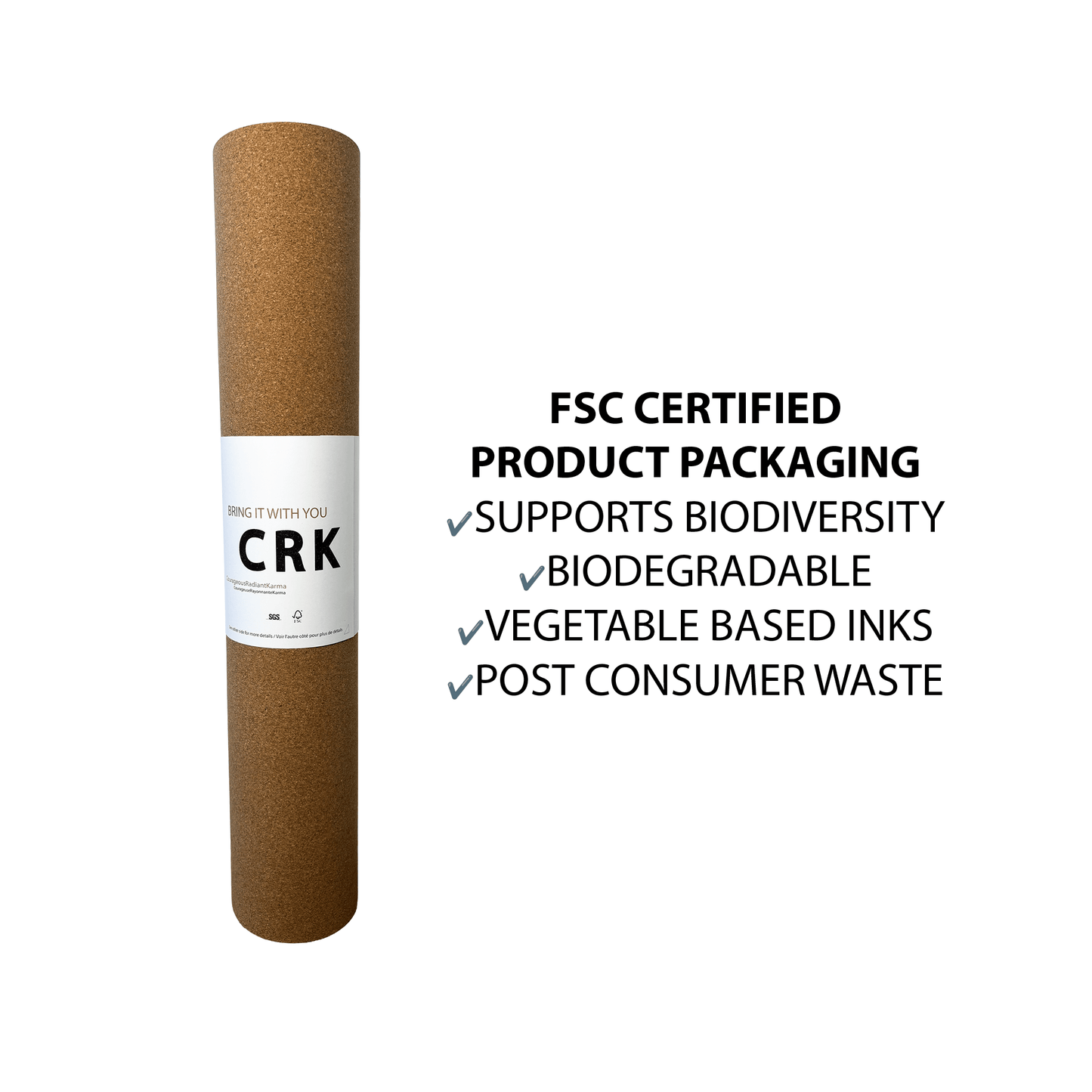
Natural rubber and cork yoga mats come from trees found in nature and are very practical to use. A cork mat’s surface can provide excellent grip and cleanliness by channeling moisture away, becoming even grippier when wet and has naturally antimicrobial properties. Natural rubber is another excellent choice because of its open-cell structure, that allows it to stay grippy when wet and provides excellent padding for your joints! You may notice that these materials are often combined to make an even better mat!
The next step is choosing a great yoga mat company to buy your mat from! Start by reading the company’s website, including the product’s materials in the description to scan for key works like recycled, cork and natural rubber. The next step is to look for reviews! A website’s reviews can reveal a lot about them! If a company has many positive and authentic reviews, it may signal that they are honest and transparent. Also look for certifications like SGS and FSC that show a company is subject to scrutiny, including environmental and product safety regulations.
With all that being said — always listen to your gut! You may find discrepancies between what a company says and the truth. If a yoga mat company makes claims that they are “seen in Vogue” when there is no mention about them online in Vogue, then it is reasonable to assume they are dishonest. Also, look out for too-good-to-be-true claims like ‘natural rubber is 100% biodegradable’. It’s okay to feel a little skeptical sometimes and to look for research to back up what a company says versus the truth. While a company that gets it wrong may not always be dishonest, they may not be that reliable either!
Once you’ve become an educated consumer, just keep in mind that It’s not always about being perfect, but knowledge is power! Even if you only know a little more today than you did yesterday, you’ll be way more likely to make healthier decisions. It may be the case that the healthier option, like a high-quality natural yoga mat is too expensive right now, but you might tell your friends about it or plan to buy it later. You may also make incremental steps like avoiding plastic water bottles or checking product labels before a purchase. Change doesn’t need to happen overnight to be beneficial, and if you’re already doing yoga or any fitness activity, then you’re off to a great start! So, the verdict is that the benefits of yoga outweigh the costs, and usually one good decision leads to more.