

Measure First: Yoga Mat Size Guide by Height and 4–5 mm Rule
Choose a mat at least as long as you are tall, with a few inches to spare for savasana. For thickness, 4–5 mm covers most needs. Under 5’6"? A standard mat works. Over 6 feet? Choose a larger mat to ensure full coverage. Some mats on the market fall in that 4 mm sweet spot.
TL;DR:
- For tall practitioners over 6 feet, choosing a large mat, at least 72 inches or more minimizes feet hanging off during poses.
- Most users should opt for a 3–5 mm thick mat to balance comfort and stability, especially for standing and balancing poses.
- Wide mats of 26 to 36 inches benefit broad-shouldered practitioners and those practicing restorative or prenatal styles.
- Material influences grip, weight, and odour, with cork and natural rubber being better choices for sweaty practices than PVC or TPE.
- Testing grip when damp and verifying fit before purchase help ensure the mat’s performance aligns with your practice style and body needs.
Table of Contents
- Yoga mat size guide: chart and length recommendations by height
- How thick should a yoga mat be?
- Should you choose a wider or extra-long yoga mat?
- Cork, rubber, TPE or PVC: how material affects your mat’s fit
- How to test and choose your yoga mat: a step-by-step checklist
- Which Crk mat fits your size and thickness needs
- Our take on getting mat size right
- Get the right size Crk mat for your practice
- Sources
Yoga mat size guide: chart and length recommendations by height
Mat length is the first decision, and it’s the easiest to get wrong. Buy too short and your heels hang off the back edge in downward dog, or your head falls off the top during savasana. The fix is simple: your mat should be at least as tall as you are, and a little longer is always better.
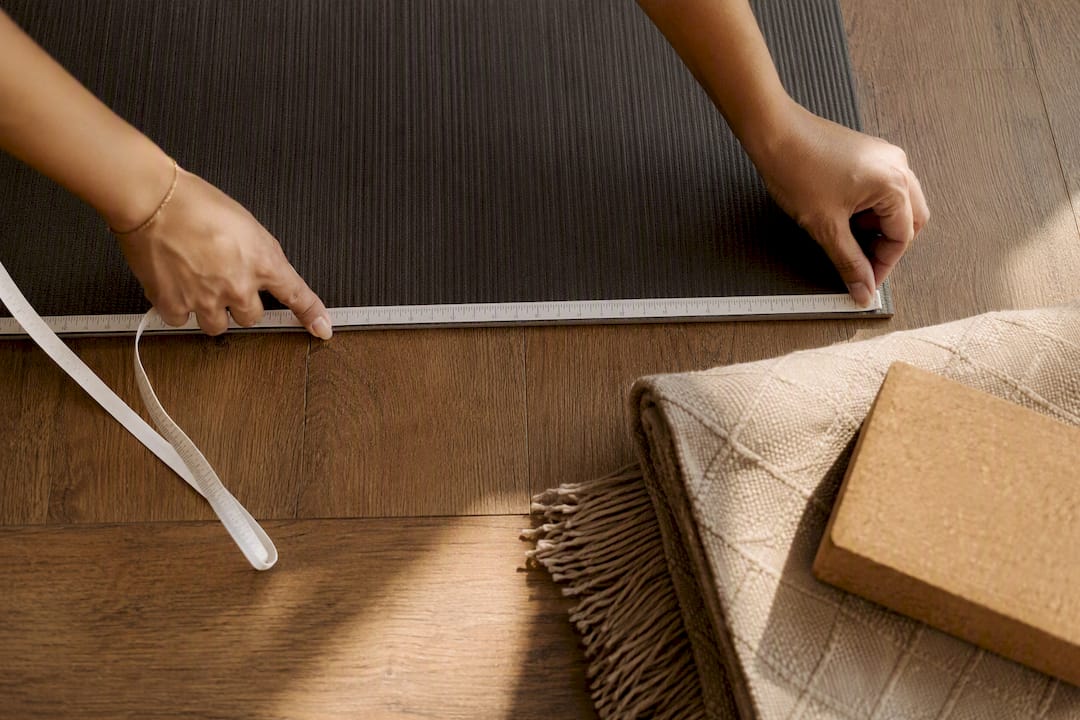
The industry default of 68 inches (173 cm) by 24 inches (61 cm) exists because it fits the average adult body and it is also compact and portable. That’s the typical mat size you’ll see in most studios and most big box stores. But “average” doesn’t mean “right for you,” especially once you’re above 5’10" or you like room to stretch out fully in reclined poses.
Here’s how mat length breaks down by height band:
- Under 5’6" (168 cm): regular mats give comfortable margin.
- 5’6"–5’10" (168–178 cm): standard mats with extra length are ideal.
- 5’11"–6’2" (180–185 cm): consider long or extra-long mats.
- 6’2" and taller (185 cm+): extra-long mats help avoid feet hanging off edges.
- Kids and petite frames: some brands offer 60–66 in (152–168 cm) mats built specifically for smaller bodies.
- Travel mats: typically 68–71 in (173–180 cm) but foldable or ultra thin that can be rolled into a light and easy-to-carry mat.
If you’re between mat sizes, round up is always better. Restorative and yin practices in particular feel better with extra space. Your body doesn’t move much in a 5 minute pigeon hold, so any part of you that’s off the mat can feel uncomfortable, especially on cold studio flooring. Extra length also cuts down on “edge hunting”, that mid-pose shuffle to reposition your hands or feet back onto the surface.
How thick should a yoga mat be?
Thickness is where most first-time buyers overcorrect. The instinct is “thicker equals more comfortable,” but that’s only half true, and the other half can wreck your balance.
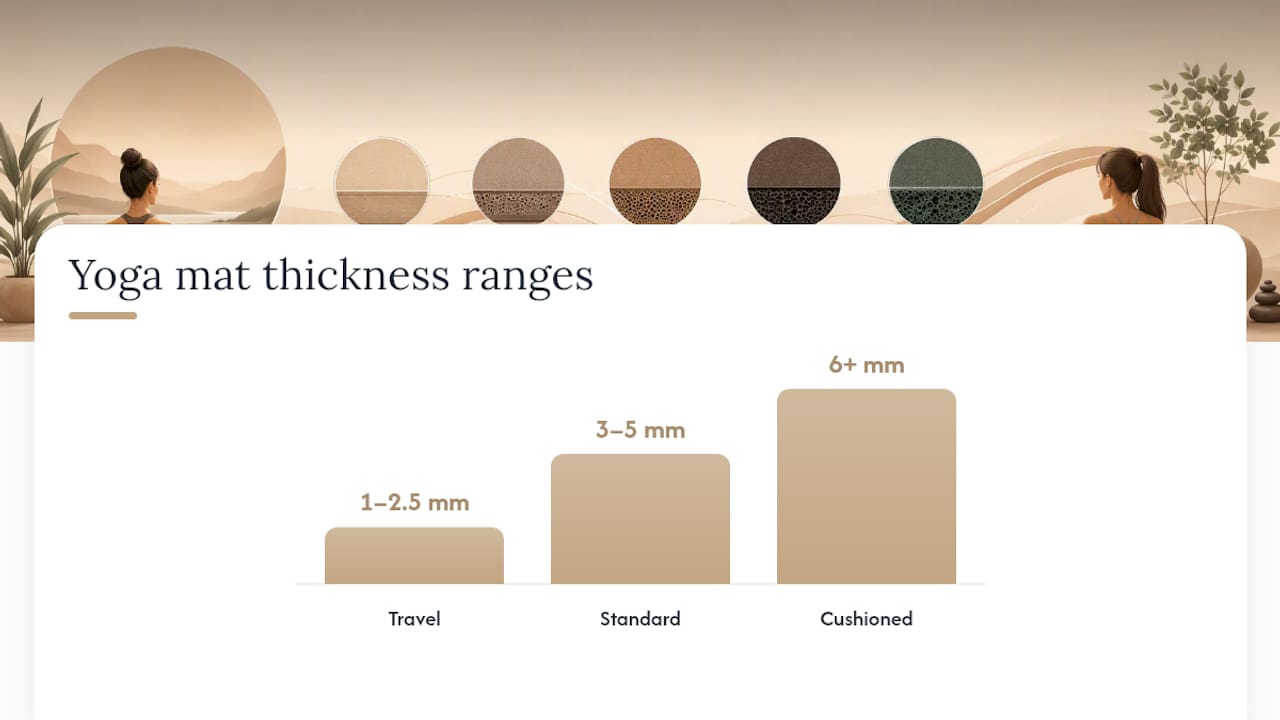
Mats generally fall into three categories:
- Travel: 1–3 mm. Thin, light, foldable. Great for a suitcase, less cushion on hard floors.
- Standard: 4 mm. The ideal mat thickness for most styles, from yin to vinyasa.
- Cushioned: 5 mm or thicker. Extra joint padding, but you may begin to lose stability.
Thickness is fundamentally a trade-off: a thicker mat cushions your knees and elbows, but it also puts distance between your foot and the floor, which makes balance poses like tree pose or half moon noticeably harder to hold steady. A 3–5 mm mat is the common compromise that most practitioners land on, a range that can accommodate travellers to yin yoga practitioners without completely sacrificing comfort and stability.
If you have sensitive knees or wrists, resist the urge to buy the thickest mat on the shelf. A folded blanket under vulnerable joints during knee-intensive sequences protects you without compromising your footing every time you step on the mat.
Pro Tip: Keep a thin travel mat and a mid-weight home mat as a pair rather than one “do everything” thick mat. You’ll use the right tool for the right session instead of dragging a heavy 6 mm mat to a hotel gym.
Should you choose a wider or extra-long yoga mat?
Standard width is 24 inches (61 cm), and it works fine for most people. But width deserves its own thought, separate from length.
Consider going wider (26–36 in / 66–91 cm) if:
- You have broad shoulders and find your hands landing off the edge in downward dog or plank.
- You practise restorative or prenatal yoga, where you’re often lying on your side with knees drawn up, needing more lateral room.
- You practise at home and want a buffer zone so your mat feels less like a tightrope.
Extra-long mats matter more for taller practitioners and for dynamic, fast-paced flows where your limbs travel further from centre. The catch with either upgrade: wider and longer mats weigh more and take up more floor and storage space, which matters if you’re rolling into a tight space, like a packed studio class, or transporting it in a suitcase.
Cork, rubber, PU or PVC: how material affects your mat’s fit
Size and thickness only tell half the story. Material decides how a mat behaves once you’re on it, particularly once you start sweating.
- Cork: naturally grippier when damp, since cork’s texture actually improves traction the wetter it gets. Wicks moisture away, and naturally antimicrobial, so resists odour buildup.
- Natural rubber: excellent grip for sweaty, hot yoga sessions, but absorb sweat and may accumulate smells over time. Anyone with a latex sensitivity should check the label first.
- PU: Provides an incredibly durable surface and is generally only a thin layer of plastic, that can be safe to use including food-safe, and also provides a smooth grip texture and showcases impressive designs.
- PVC: the older standard, durable and inexpensive, but the least eco-friendly and safe-to-use option with impacted grip when wet.
Material choice affects grip, weight, and scent more than a millimetre or two of thickness ever will. A dense natural-rubber mat at 79 inches can weigh noticeably more than a compact travel mat, a real consideration if you’re carrying it four blocks to a studio rather than driving.
When it comes to mat care: an SGS-certified, low chemical mat made of natural materials like natural rubber, cork and hemp will never need to be aired out before it's first use. However after each session, air your mat out since dampness can lead to bad odours and bacteria build up. Wipe down after every hot or sweaty session with a diluted disinfectant cleaner or soap, and let it air dry flat.
How to test and choose your yoga mat: a step-by-step checklist
Once you know your length, thickness, and material preference, confirm the fit before you commit.
- Measure yourself, then add margin. Find out your height in inches, and then add 3-5 inches for a yoga mat with enough space to practice on or 6+ inches for spacious yoga mat.
- Match thickness to your main practice. Vinyasa and balance-heavy styles favour 3–4 mm. Restorative, yin, or joint-sensitive practice can go 5–6 mm.
- Weigh transport against comfort. If you’re carrying your mat on transit or to a studio several times a week, a heavier cushioned mat becomes a daily hassle, so choose a lighter mat thats 4mm or less.
- Test grip. A quick test is to wet your palm and press it into the surface however this may not be a great real life indicator of whether a mat is right for you. If you have the option to test out your mat for a quick 10-20 minute sequence that gets your heart rate up, you will really know if the mat materials are compatible for your body type. The ideal mat for you will feel grippy and supportive, the moment that your hands begin to warm up. Avoid judging a mat's grip when your hands are cold.
In person, three quick tests tell you almost everything:
- Lie down in savasana. Do your heels and head clear both ends?
- Move into downward dog. Do your hands and feet stay planted inside the mat’s edges?
- Press your palm down hard, then roll onto one knee. Does the surface sink excessively or feel unstable?
Watch for red flags: a strong chemical odour straight out of the packaging, a surface that turns slick rather than grippy once damp, or visible compression under normal standing weight. Any of those point to a mat that won’t hold up to regular use and that is likely full of toxic chemicals.
Pro Tip: If you’re buying online without an in-store test, check the brand’s return window before you buy. A mat that feels fine standing in your living room can behave completely differently once you’re sweating through a 90 minute hot class.
Which Crk mat fits your size and thickness needs
Once you know your length, thickness, and material preference, matching it to an actual product is straightforward.
- Standard build, everyday practice: The Standard Mat runs 4 mm thick with an organic cork surface and natural rubber base, with a built in alignment system for cueing hand and foot placement.
- Travel, balance work, or lighter cushioning: The Army Mat is 3 mm thick, made from natural rubber, and suits practitioners who prioritize floor feel and portability over extra padding.
- Grip-focused, sweaty or hot practice: The Sun Mat pairs a 4 mm organic cork top with recycled natural rubber underneath, and its anti-microbial surface is built specifically for practices where sweat and odour control matter most.
Premium mats are built from organic cork and natural or recycled rubber rather than PVC, which aligns with grip and odour-control priorities covered throughout this guide.
Our take on getting mat size right
Most people overthink thickness and underthink size. The length rule is almost mechanical: measure yourself, add 3-6+ inches, done. Thickness is where personal judgment matters more, keeping in mind that a 4 mm mat handles nearly every practice style well, and a folded blanket solves the rare knee-heavy session better than permanently sacrificing your balance.
Sustainability isn’t separate from performance here. Cork’s grip actually improves with sweat, and natural rubber holds up to years of daily rolling and unrolling in a way cheaper foams don’t. If you can test a mat in person before buying, do it. Feel matters more than a spec sheet.
— Crk
Get the right size Crk mat for your practice
Skip the guesswork of comparing specs across a dozen retailer listings. Some core mats from a yoga mat brand map directly onto the sizing and thickness ranges covered in this guide, enabling a direct purchase once height and practice style are determined.

If you fall into the standard height band and want an all-round 4 mm mat with an alignment guide built in, The Standard Mat is the practical starting point. Want something lighter for travel or balance-focused sessions, closer to that 3 mm range covered in the thickness section? The Army Mat fits. If grip in hot, sweaty practice is your priority, The Sun Mat’s cork surface and anti-microbial properties address exactly the odour and slip concerns raised earlier in this guide. For a strap or carrying accessory to pair with your new mat, check out the Black strap that doubles as an exercise strap as well.
Pick your size category from the chart above, then choose the product that matches your thickness and material preference.
Additional Sources
- How to Choose a Yoga Mat | REI expert advice
- Best yoga mats (GearJunkie)
- Choosing the right yoga mat (Los Angeles Times)
- How to choose a yoga mat that fits your practice | Kit Authority
- The 3 Best Yoga Mats of 2026 | Reviews by Wirecutter


