

Keep Cork and Rubber Mold Free: Clean, Dry, and Store Your Yoga Mat
Most mould on a yoga mat is removable if you catch it early: strip the residue with a soap wipe, then dry both sides completely. Deeply colonised foam, the kind with fuzzy growth pushed into an open-cell surface, usually isn’t worth saving. Stop using the mat now, and don’t reach for bleach or a full alcohol soak until you know your material since the wrong cleaner can wreck grip faster than the mould did.
TL;DR:
- Most mould on yoga mats can be removed if cleaned early using soap, thorough drying, and proper ventilation, especially on open-cell surfaces.
- Natural rubber and cork mats should avoid vinegar and alcohol, relying instead on gentle soap or witch-hazel, with no soaking to prevent damage.
- Persistent mould spots likely indicate material deterioration, making replacement necessary if odour persists after two clean-and-dry cycles.
- Proper drying with airflow and avoiding direct sun help prevent mould recurrence, and cleaning tools like Magic Spray are recommended for spot treatment.
- Mats designed with cork and natural rubber, combined with disciplined cleaning and drying routines, naturally resist mould and require less maintenance.
Table of Contents
- How do you clean mold off a yoga mat right away?
- Which cleaning method matches your mat’s material?
- What if mould keeps coming back after cleaning?
- How do you dry and store a mat so mould doesn’t return?
- When should you replace a yoga mat instead of cleaning it?
- How does Crk’s care guidance fit this approach?
- Grip versus upkeep: an honest trade-off
- Ready for a mat that’s easier to keep mould-free?
- Where these cleaning and safety facts come from
- Sources
- FAQ
How do you clean mold off a yoga mat right away?
Small specks and a musty smell respond well to a quick, ordered clean. Do this before the mould has a chance to spread through the seams.
- Ventilate first. Open a window or move the mat outside, then lay it flat.
- Glove up if mould triggers any sensitivity for you.
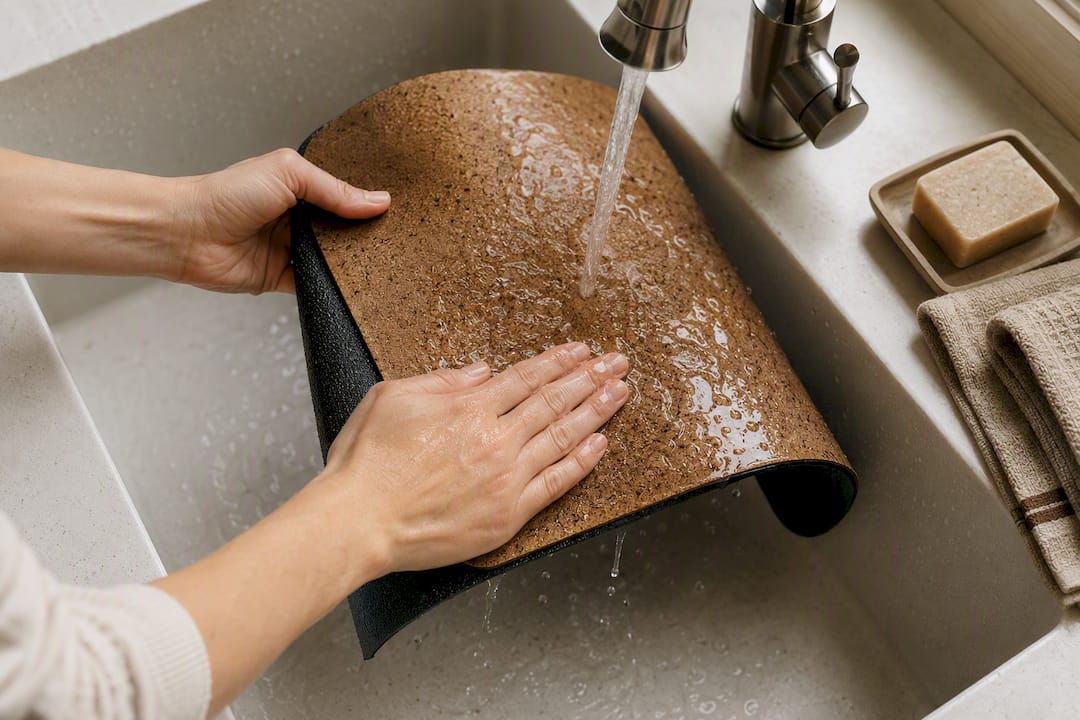
- Soap pass. Mix warm water with a few drops of mild, pH-neutral soap. Apply with a wrung-out cloth, working in sections rather than dousing the whole surface.
- Rinse-wipe. Go over every section again with a clean, damp cloth to lift soap film, since leftover residue attracts dirt and invites the mould right back.
- Spot-treat lingering odour. A light vinegar wipe works on closed-cell mats; witch-hazel is gentler on natural rubber or cork. Apply either to the cloth first, never straight onto the mat.
- Dry with airflow, both sides, before you even think about rolling it up.
Pro Tip: Before storing, run the “sniff test”: roll the mat loosely for ten minutes, then unroll and smell it. If mustiness comes back, it’s still holding moisture somewhere in the grooves.
Most mould problems trace back to trapped sweat and oils sitting under a surface film, which is why the soap pass and full drying matter more than any specific cleaner.
Which cleaning method matches your mat’s material?
Not every mat reacts the same way to soap, vinegar, or a soak, so identify what you’re working with before you deep clean. Run a finger over the surface: if it feels slightly tacky and absorbs a drop of water, it’s open-cell. If water beads up and wipes off cleanly, it’s closed-cell.
- Natural rubber and cork: Skip vinegar and alcohol entirely, both of which can dry out or weaken the surface over time. Use mild soap or witch-hazel with gentle mechanical action, never a hard scrub. Cork especially shouldn’t be soaked, and direct sun during drying can crack the veneer.
- PU-topped mats: A careful soap wipe is usually enough. Harsh detergents can peel the coating away from the base layer.
- Cork tops generally: Cork carries natural antimicrobial properties, so it needs less aggressive cleaning than synthetic surfaces to begin with.
- TPE and PVC: Diluted soap or a light vinegar dilution can work here. Some closed-cell PVC mats tolerate a gentle tub soak, but confirm this against the manufacturer’s own care instructions first.
Soaking rule of thumb: only submerge a mat if it’s genuinely closed-cell and the manufacturer says it’s fine. Soaking an open-cell mat traps moisture inside the foam, which is exactly the condition mould needs to take hold.
Once you’ve cleaned, check the edges and any embossed grooves for soap film or standing moisture. A daily wipe plus a periodic deep clean cuts down on bacterial and fungal buildup far more reliably than one aggressive scrub every few months. Machine washing and over-wetting damage most mats regardless of material, so keep water contact deliberate and controlled.
What if mould keeps coming back after cleaning?
A few spots that survive the deep clean need a graduated response, not a stronger chemical right away.
- Try 3% hydrogen peroxide first. Spot-test a hidden corner, apply for a short dwell time, then wipe and rinse. Peroxide breaks down mould without the drying-out effect that alcohol causes or the fume and material risk that bleach carries.
- Skip bleach and alcohol-based disinfectants as a default. Standard household disinfectants, including Lysol, can degrade natural rubber and cork, weakening grip and shortening the mat’s life.
- Use a soft brush on textured or cork surfaces. Light pressure only. Abrasive pads scuff cork and PU in ways that don’t reverse.
- Two clean-and-dry cycles is your limit. If a spot reappears after that, the mould has likely worked into the material itself, not just the surface.
How do you dry and store a mat so mould doesn’t return?
Cleaning removes what mould feeds on. Drying removes the condition it needs to grow, which makes this step the actual prevention pivot, not an afterthought.
- Air both sides after every clean, ideally with a fan running nearby to move air across the surface.
- In humid climates, run a dehumidifier in the room where the mat dries.
- Keep rubber and cork mats out of direct sun while drying. Heat and UV degrade both materials faster than normal wear does.
- Run the pass/fail check: once the mat feels dry, leave it out another 30 to 60 minutes, roll it loosely for 10 minutes, then unroll and sniff. If mustiness shows up, it still holds moisture in a seam or groove.
- Wipe daily after sweaty sessions; deep clean weekly or biweekly depending on how much you sweat and what the mat is made of.
Pro Tip: Your carry bag and strap pick up the same sweat and oils as the mat. Wash them on the same schedule, or you’re just reintroducing the problem every time you roll up.
When should you replace a yoga mat instead of cleaning it?
Some mats aren’t worth rescuing, and knowing the cutoff saves you from cycling through the same failed clean over and over.
- Odour survives two full clean-and-dry cycles. At that point, mould has likely colonised the foam itself rather than sitting on the surface.
- Spots keep returning in the same zone. Recurring mould after repeated proper cleaning attempts usually means the material is compromised, not that you’re cleaning it wrong.
- The surface flakes, peels, or turns sticky. That’s structural breakdown, and no cleaner fixes it.
- You’re mould-sensitive or notice allergy symptoms after practice. Replace rather than keep testing your limits, and consider how clean surfaces generally reduce allergy triggers in enclosed practice spaces.
When you replace, look for a mat built for lower maintenance from the start: a disciplined closed-cell design or a cork surface that resists buildup naturally.
How does Crk’s care guidance fit this approach?
Crk mats combine cork with natural rubber, a pairing chosen partly because cork brings antimicrobial surface properties into a build meant for sweaty, repeated practice. The alignment guides on Crk mats support consistent hand and foot placement session after session, which matters less for mould prevention directly and more for keeping the surface wear even.
- Crk recommends soap over harsh disinfectants, full drying over quick wipes, and gentle handling for cork.
- For stains or spot treatment, Crk’s Organic Magic Spray is built for this exact job. Test a hidden corner, wipe the affected area, then dry fully before rolling.
- Product-care instructions specific to each mat live on its own product page, so check those before applying anything new.
Grip versus upkeep: an honest trade-off
High-grip, wet-surface mats reward you mid-practice but demand disciplined drying and more frequent cleaning in return. If you’d rather skip aggressive cleaners altogether, prioritise drying habits over cleaning strength. A daily wipe, a weekly deep clean, and a full dry between sessions beats any single “miracle” spray.
— Crk
Ready for a mat that’s easier to keep mould-free?
Crk builds its mats around the same principle this article keeps coming back to: less aggressive cleaning, more natural resistance built into the material itself. The Standard Mat pairs cork with natural rubber for a surface that activates grip with moisture instead of fighting it, and cork’s antimicrobial trait means less frequent deep cleaning to begin with.
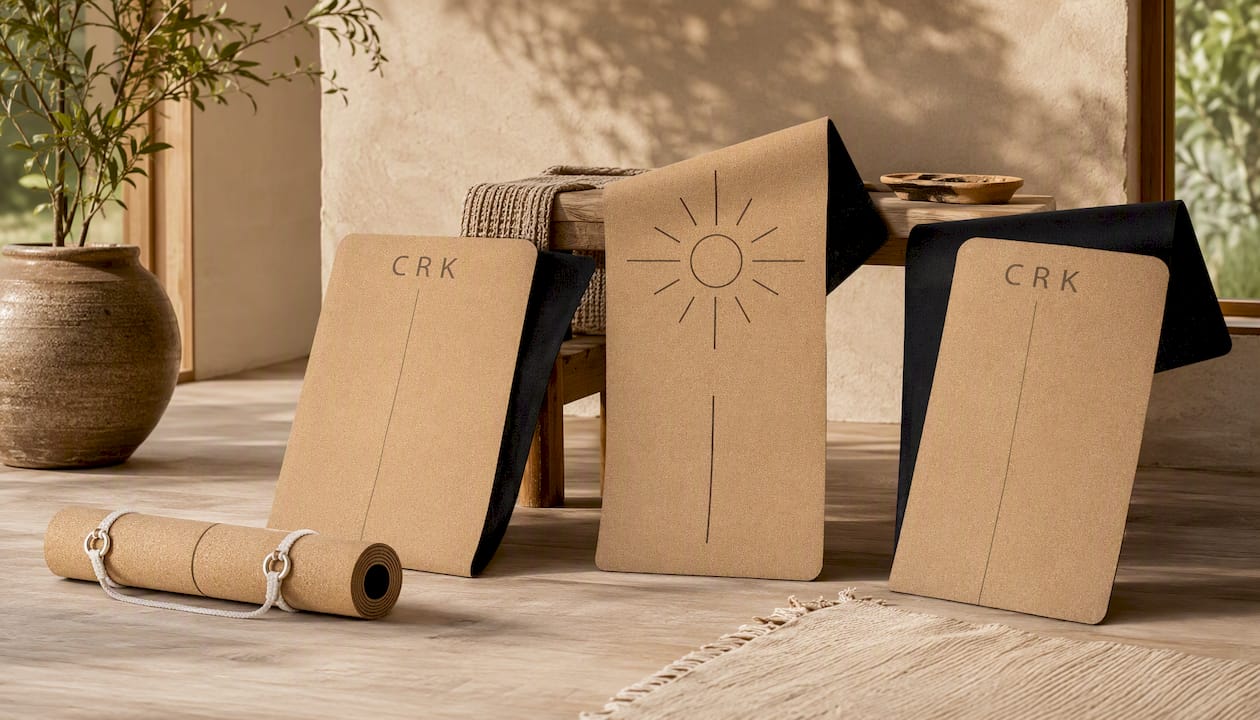
The Sun Mat and its recycled rubber counterpart follow the same build logic, cork on top, durable rubber underneath, designed for hot yoga and heavy sweat without the odour buildup that pushes most mats toward early replacement. For spot treatment and routine care once your mat arrives, Crk’s Organic Magic Spray handles stains without the harsh chemicals that degrade rubber and cork over time.
If your current mat has reached the point of no return, browse the product pages above and pick the build that matches how much upkeep you’re actually willing to do.
Where these cleaning and safety facts come from
- Good Housekeeping (UK): how to clean a yoga mat
- Everyday Clean (Australia): cleaning frequency and material care
- OnePeloton blog: microbiologist Charles Gerba on mat hygiene
Sources
- How to clean yoga mat — Good Housekeeping (UK)
- How to Clean a Yoga Mat — Everyday Clean (Australia)
- How to clean your yoga mat — OnePeloton blog (expert quote)
FAQ
How do you clean mould off a yoga mat?
Wipe the surface with warm water and a few drops of mild soap, rinse away all soap film, then dry both sides completely with airflow before rolling.
What is the lifespan of a yoga mat?
It depends on material and care, but a mat that develops repeat mould spots or persistent odour after two full clean-and-dry cycles has generally reached the end of its usable life. Cork and natural rubber mats with disciplined drying routines tend to outlast mats left damp after every session.
Can you spray Lysol on a yoga mat?
It’s not recommended for most mats. Standard household disinfectants like Lysol can degrade natural rubber and cork, weakening grip and shortening the mat’s usable life, so mild soap or a material-appropriate spot treatment is the safer default.
How do you clean mould off rubber yoga mats?
Use mild, pH-neutral soap and a soft cloth rather than vinegar or alcohol, both of which can dry out natural rubber over time. Rinse thoroughly to remove soap film, then dry fully with airflow on both sides before storing.


