

Cork & Natural Rubber Mat vs Yoga Towel: Best Setup for Sweaty Yoga
Use a mat for cushioning, joint protection, and daily home practice — as detailed in this Active Recovery Techniques guide for athletes. Use a towel to manage sweat and grip in hot or high intensity classes. Combine both for hot yoga, heated vinyasa, or any studio session where sweat pools on the surface. If you have sensitive knees or wrists, or you practise on hardwood or tile, keep the mat as your base no matter what else you add.
TL;DR:
- Mats offer cushioning and support suited for restorative and prop-heavy styles, with thickness and material choice influencing grip and durability.
- Cork and natural rubber mats resist moisture and improve grip when wet, making them ideal for sweaty, hot yoga practices.
- Microfiber towels absorb large amounts of sweat, dry quickly, and enhance grip, especially when reinforced with silicone backing for high-intensity classes.
- Combining a mat with a towel provides optimal support for practices involving heavy sweating, with proper setup preventing slips and reducing mat wear.
- Budget towels perform similarly to premium options in slip resistance, so prioritize spending on the durable mat and choosing a towel based on moisture exposure.
Table of Contents
- Yoga towel vs mat: the core functional differences
- When a yoga mat alone is the right choice
- When a yoga towel is the right choice (or enough on its own)
- How to set up a mat and towel together
- Why cork, rubber, and microfiber grip differently when wet
- Keeping mats and towels performing longer
- How Crk’s cork mats meet the demands of sweaty practice
- What the towel-versus-mat debate gets wrong
- Choosing a Crk mat for your practice
- Sources
- FAQ
Yoga towel vs mat: the core functional differences
A mat and a towel solve different problems. A mat gives you cushioning, joint support, and a stable foundation you can balance on. A towel gives you moisture control and grip that activates as you sweat, but it offers almost no padding on its own.
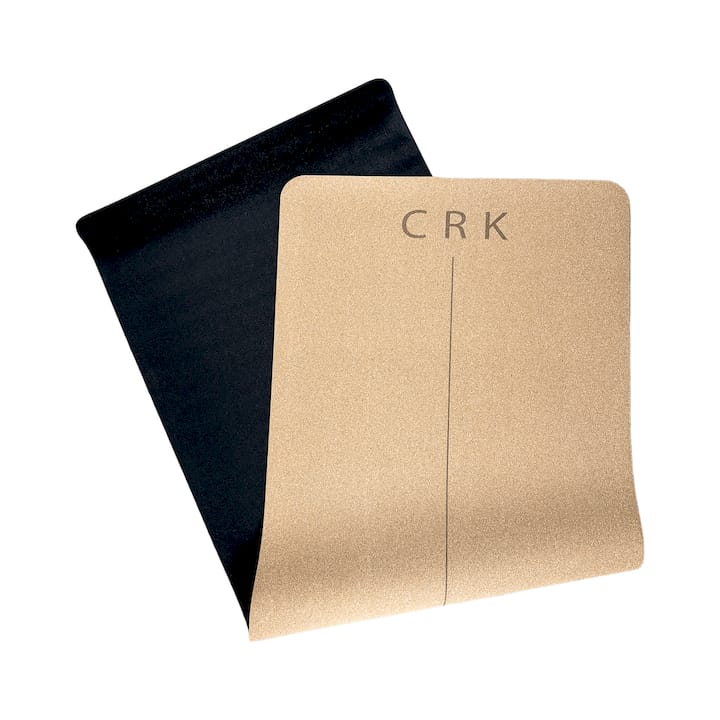
Traction behaves differently depending on what the surface is made of and how wet it gets. Cork tends to grip harder the more moisture hits it, which is unusual among mat materials. Natural rubber starts with strong dry traction but can lose some of that edge if it stays saturated without a barrier. Microfiber towels do the opposite of what you’d expect: they often get grippier once damp, because the fibres swell slightly and create more surface friction against skin.
Cost and portability split along similar lines. A durable mat is the bigger upfront investment, while a towel is the cheap, packable add-on that rolls into a gym bag. That’s part of why Wirecutter’s testing found little real-world difference between $20 and $70 hot-yoga towels — grip performance was similar across price points, even if backing durability varied.
Here’s the quick breakdown:
- Mats provide cushioning, alignment cues, and long-term joint support.
- Towels absorb sweat and add activated grip that improves as you perspire.
- Cork and rubber hold their base traction well; microfiber amplifies grip when wet.
- Restorative and yin practitioners lean mat-only; hot yoga and heated vinyasa crowds lean mat-plus-towel.
- Budget-conscious travellers often start with a towel and add a mat later.
When a yoga mat alone is the right choice
If your practice is mostly restorative, yin, or prop-heavy, a mat alone usually covers everything you need. These styles hold poses longer and rely on stable, cushioned support rather than moisture control, so a towel adds little value.
Thickness matters more than people expect. A mat that is too plush can undermine your foundation in standing balance poses, as your foot sinks instead of gripping the surface. A mat with moderate thickness is generally recommended unless additional cushioning is needed for joint support.
Material choice changes the whole experience:
- Cork mats are hydrophobic and naturally antimicrobial, which makes them lower maintenance for regular practice, according to Yoga Journal’s mat guide.
- Natural rubber mats deliver strong dry grip and enough density to support alignment work, though they need more attention if repeatedly soaked.
- PVC and TPE mats are the budget entry point, lighter on the wallet but generally less durable over years of use.
Weight is worth factoring in if you’re commuting to a studio. A dense cork-rubber mat carries more heft than a thin foam roll, and reviewers at the Strategist note that spending closer to the $100 range typically buys a mat that lasts years rather than months, which matters if you’re rolling it up daily.
When a yoga towel is the right choice (or enough on its own)
Hot yoga, heated vinyasa, and shared gym mats are where a towel earns its keep. Sweat pools fast in a heated room. Without a barrier, your hands and feet slide right off a rubber or PVC surface. A purpose-built yoga towel is designed to wick that moisture and keep working as a grip layer instead of a liability.
Construction quality is what separates a towel that performs from one that just gets wet. The features that matter:
- Microfiber material absorbs many times its weight in water and dries far faster than cotton, according to a Wovii buying guide.
- Silicone grip dots or backing anchor the towel to the mat so it doesn’t creep during vinyasa flows.
- Full-length sizing matters for hot classes, since a short towel leaves your feet or hands on bare mat once sweat starts.
A towel alone has real limits. It offers almost no cushioning, so a hardwood floor still feels like a hardwood floor underneath it. Backing quality also varies a lot. Cheap towels with weak grip patterns bunch and slide exactly when you need stability most. That said, for travel or gym sessions where you’re using a shared or rental mat, a good towel is often all you need. It handles hygiene and slip without adding luggage weight.
How to set up a mat and towel together
Pairing the two solves the problem each one has on its own. The mat handles cushioning. The towel handles sweat and grip. Here’s how to get the setup right before class starts.
- Check towel fit first. Full-length towels should match or slightly exceed your mat’s dimensions so no bare mat is exposed once you’re sweating.
- Confirm the backing works with your mat surface. Silicone-dot backing grips best on smoother materials; textured cork or rubber mats may need a towel with a firmer grip pattern.
- Centre the towel and smooth out wrinkles. Bunched fabric under your palms or heels is where slips start.
- Lightly mist the towel if it’s brand new. Some brand guides, including Manduka’s towel guide, recommend a light spray to help activate grip before a hot class rather than waiting on sweat alone.
- Re-anchor between poses if needed. If the towel shifts during transitions, pause and re-centre it rather than fighting the slide mid-pose.
Pro Tip: If you’re practising on a hard floor without much mat cushioning, double up: fold a second towel lengthwise under your knees for extra padding during kneeling or tabletop poses.
One quiet benefit of this combo: a towel absorbs most of the sweat and oil that would otherwise soak into your mat, which cuts down how often the mat itself needs a deep clean.
Why cork, rubber, and microfiber grip differently when wet
Material science explains most of what you feel underfoot. Cork is hydrophobic, meaning it resists absorbing water rather than soaking it in, and that same surface often becomes grippier as sweat builds up. It’s also naturally antimicrobial, which is part of why cork shows up so often in guidance for sweaty, high-frequency practice.
Natural rubber behaves differently. It offers strong traction and enough density to support your joints when dry, but repeated saturation without a protective towel layer can wear it down faster over time.
Microfiber towels are the moisture specialists of the group:
- They can hold multiple times their own weight in water, far outperforming cotton on absorbency and dry time, per Wovii’s analysis.
- Damp microfiber often grips better than dry microfiber, since the fibre texture creates more resistance against skin.
- Cotton towels, by contrast, saturate quickly, stay wet, and slide rather than grip once soaked through.
Texture and backing details matter as much as the base material. Silicone dots, raised patterns, and micro-ridging all change how a surface behaves once moisture enters the picture, and a highly textured mat can also collect lint or towel fibres over time, according to the Strategist’s mat review, which adds a small maintenance cost to that extra grip.
Keeping mats and towels performing longer
Daily habits matter more than occasional deep cleans. Air out your mat after every sweaty session and spot-wipe it before rolling it up. Sweat and oils left sitting on the surface are what shorten a mat’s usable life, and a towel used consistently over the mat cuts that exposure significantly, according to Unalome Yoga’s comparison guide.
A few habits worth building into your routine:
- Daily: wipe down and air-dry your mat; never pack it away damp.
- Weekly or monthly: deep-clean with a gentle, mat-safe cleaner rather than harsh chemicals or heat.
- Towels: most microfiber towels are machine-washable, but check backing material first, since silicone dots can degrade under high heat.
- Storage: keep both away from direct sunlight and damp storage spots, and rotate towels so each one fully dries between uses.
How Crk’s cork mats meet the demands of sweaty practice
The mats are built from cork and natural rubber, materials chosen because cork resists moisture and carries antimicrobial properties rather than relying on synthetic treatments. Each mat includes an alignment system to help with foot and hand placement, which matters in flow-based classes where checking positioning frequently is not practical.
The mats in this lineup, including The Wave Mat and The Moon Mat, are built for practitioners who sweat heavily and want a surface that holds grip rather than fighting it. Hot-yoga attendees and daily practitioners who want to avoid synthetic odours or chemical off-gassing may prefer this construction.
What the towel-versus-mat debate gets wrong
Most advice treats this as a binary choice, and that’s the wrong frame. The real decision is sequential: pick your mat material first, based on how you practise most weeks, then decide whether a towel needs to join it for specific classes. A restorative practitioner who buys a towel first has solved a problem they don’t have.
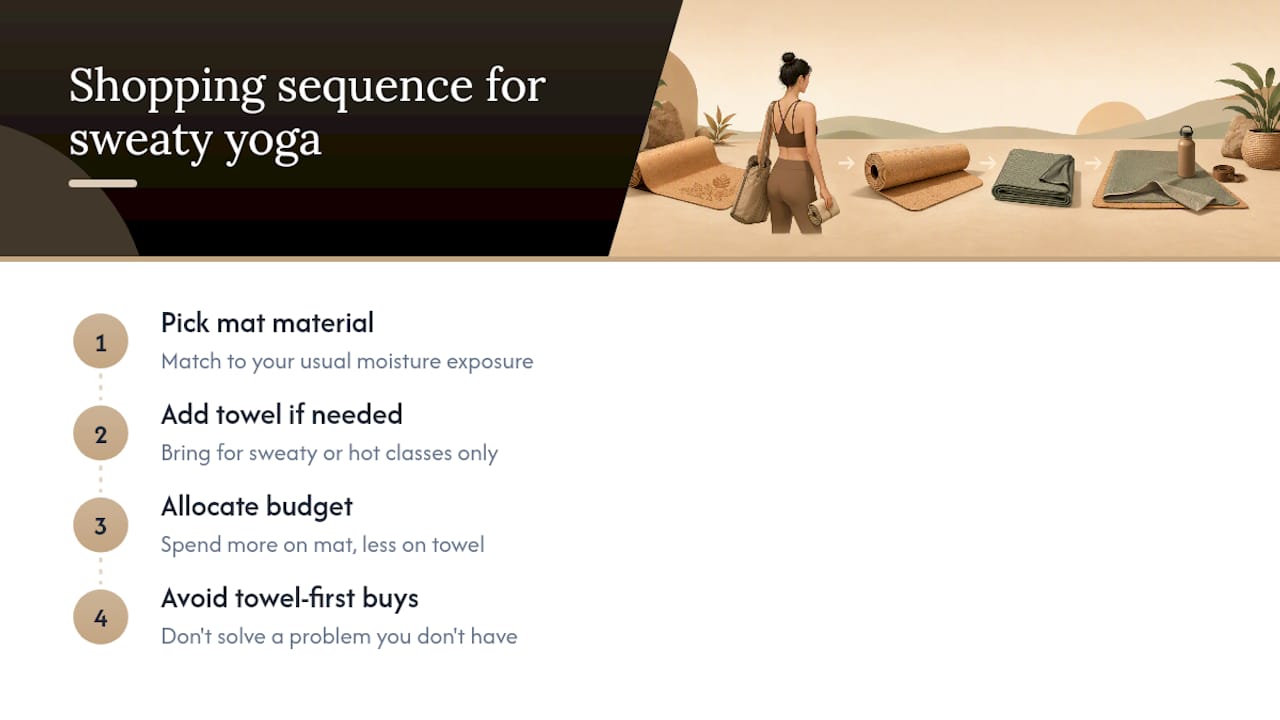
The conventional wisdom that “expensive equals better grip” doesn’t hold up well either. Wirecutter’s own testing found budget and premium towels performing similarly on slip resistance, with the real differences showing up in backing durability over time, not raw traction. That should change how you shop. Spend more on the mat, since it’s the piece you’ll use for years. Spend less on the towel, since a $20 microfiber towel with decent backing does the job a $70 one does.
What readers should prioritize first is matching material to moisture exposure, not chasing a premium price tag on either product.
— Crk
Choosing a Crk mat for your practice
For those dealing with sweat and slipping, mats made of cork and natural rubber can address both issues together, rather than layering a towel over a synthetic surface.
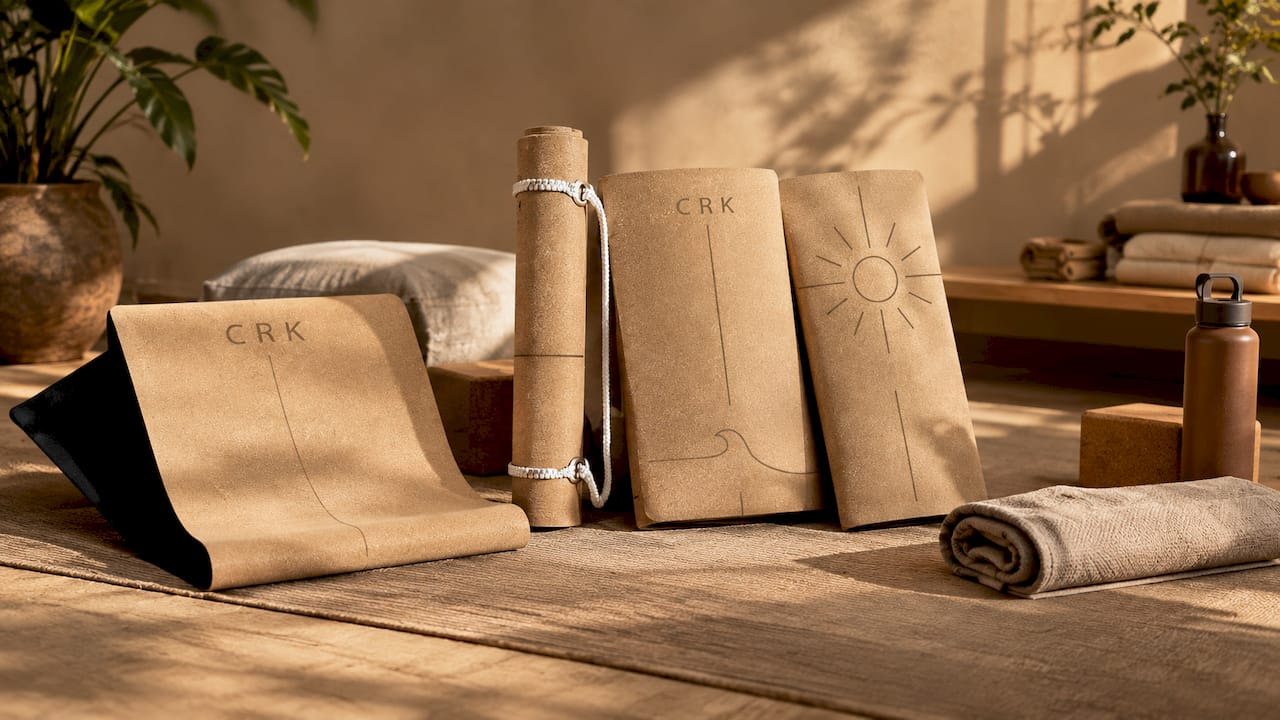
The lineup offers options depending on texture and colour preference. The Standard Mat is the straightforward daily option built for practitioners who want consistent grip without extra pattern work. The Wave Mat and The Sun Mat offer the same cork-and-rubber construction with different surface designs, so you can pick based on what feels right underfoot as much as how it looks.
Each mat features alignment guides and an antimicrobial surface, so choosing between options depends on feel and finish rather than performance differences. Browse the current lineup at Crk and pick the mat that matches how often, and how hard, you sweat.
Sources
- What Separates a $70 Hot Yoga Towel From a $20 One? Not Much. | Reviews by Wirecutter
- Yoga Towel Benefits & Buying Guide | Grip, Hygiene & More
- Best yoga mats guide | Yoga Journal
- The 3 Best Yoga Mats — Strategist (New York Magazine)
FAQ
Can I use a yoga towel as a yoga mat?
Not effectively on its own. A towel offers almost no cushioning, so it works as a mat substitute only in a pinch, like a hard studio floor with no mat available, but it won’t protect your joints the way a proper mat does.
Do I really need a yoga towel?
Only if you sweat heavily or practise hot yoga, heated vinyasa, or use shared studio mats. For low-sweat styles like restorative or yin, a mat alone is usually enough.
Why do people use a towel on their yoga mat?
Towels absorb sweat and add activated grip that a plain mat surface can’t provide once it gets wet, plus they protect the mat itself from sweat and oil buildup that shortens its lifespan.
Is a yoga towel just a microfiber towel?
Not quite. A purpose-built yoga towel is usually microfiber, but it also includes grip backing, such as silicone dots, and full-length sizing that a generic bath or gym towel lacks.
Should I choose cork over rubber for hot yoga?
Cork tends to grip harder as it gets damp and comes with natural antimicrobial properties, which makes it a strong option for sweaty, high-frequency practice compared with rubber alone.


