
Five Minute Test to Stop Yoga Mat Shedding with Material Specific Care
Most yoga mat shedding comes down to friction wearing away the surface layer, or the material breaking down chemically from heat, sweat, or the wrong cleaner. Stop using anything harsh on it right now. Rinse with plain water, wipe dry, and let it air-dry fully. Run that cycle twice. If flakes keep appearing or you can see the backing layer underneath, retire the mat. That’s the five-minute test, and it tells you almost everything you need to know.
TL;DR:
- Shedding results mainly from friction, oxidation, low material density, and exposure to heat, sweat, or harsh cleaners that weaken the mat’s surface.
- Proper cleaning involves gentle water-based solutions as needed, avoiding abrasive products that accelerate material breakdown.
- To prevent damage, store mats in a cool, dark place, air-dry thoroughly before rolling, and use a towel for hot classes to limit friction and moisture contact.
- Red flags for replacing a mat include persistent flakes, visible backing material, bubbling, lifting edges, or a slick surface.
- Special care routines and choosing durable organic cork and recycled rubber mats extend lifespan and reduce environmental waste compared to cheap, short-lived options.
Table of Contents
- What causes yoga mat shedding
- How different mat materials shed differently
- How do you clean a yoga mat without making it worse
- How to prevent yoga mat shedding
- Cosmetic wear or structural failure? How to know when to replace your mat
- Quick fixes and short-term mitigation
- What Crk knows about cork and natural rubber durability
- Cheap mats, waste, and the real cost of replacing often
- A cork and rubber mat built to resist shedding
- Sources
What causes yoga mat shedding
Shedding is rarely one single problem. It’s usually two or three factors stacking on top of each other until the surface gives up.
Friction is the biggest driver. Every downward dog puts your palms on the same six inches of mat. Every lunge grinds the ball of your foot into the same spot. Over months, those hot spots take far more abrasion than the rest of the surface, which is why shedding almost always starts in predictable places rather than spreading evenly. Shedding is typically caused by friction from dynamic practice, oxidation of rubber materials, or breakdown of low-density foam, and harsh cleaners and too much direct sun exposure only speed that process up.
Heat and UV exposure work on a slower timeline but can cause damage, especially on natural rubber. It oxidizes when it’s exposed to oxygen, heat, and light over time, and that chemical change is what turns a once-grippy surface brittle and crumbly. Leave a mat rolled up in a hot car trunk a few times a summer and you’re fast-forwarding through months of natural aging.
Material density matters more than most people realize. Low-density foam, especially the TPE found in a lot of entry-level mats, doesn’t hold its structure under repeated shear stress the way a denser material does. It starts to pill, almost like an old sweater, shedding tiny beads rather than large flakes.
Then there’s what you’re putting on the mat, not just what you’re doing to it. Lotions, sunscreens, and essential oils are the quiet culprits behind a lot of “mystery” shedding. These products are formulated to penetrate skin, and they do the same thing to a porous mat surface, working into the material and softening the internal binders that hold it together.
A handful of habits accelerate all of the above:
- Practising in shoes, which grinds grit and debris directly into the surface
- Machine washing or drying a mat that was never designed for it
- Using cleaning sprays with too much alcohol or vinegar, essential oil concentrates, or bleach, especially on rubber mats.
- Rolling the mat while it’s still damp, which traps moisture against the binder layer
These may not single-handedly ruins a mat overnight, however t’s the accumulation that turns normal wear into a mat that’s flaking in your hands after six months.
How different mat materials shed differently
The material your mat is made from determines both how it wears and what a “warning sign” actually looks like. Treating a cork mat and a foam mat the same way is where a lot of people go wrong.
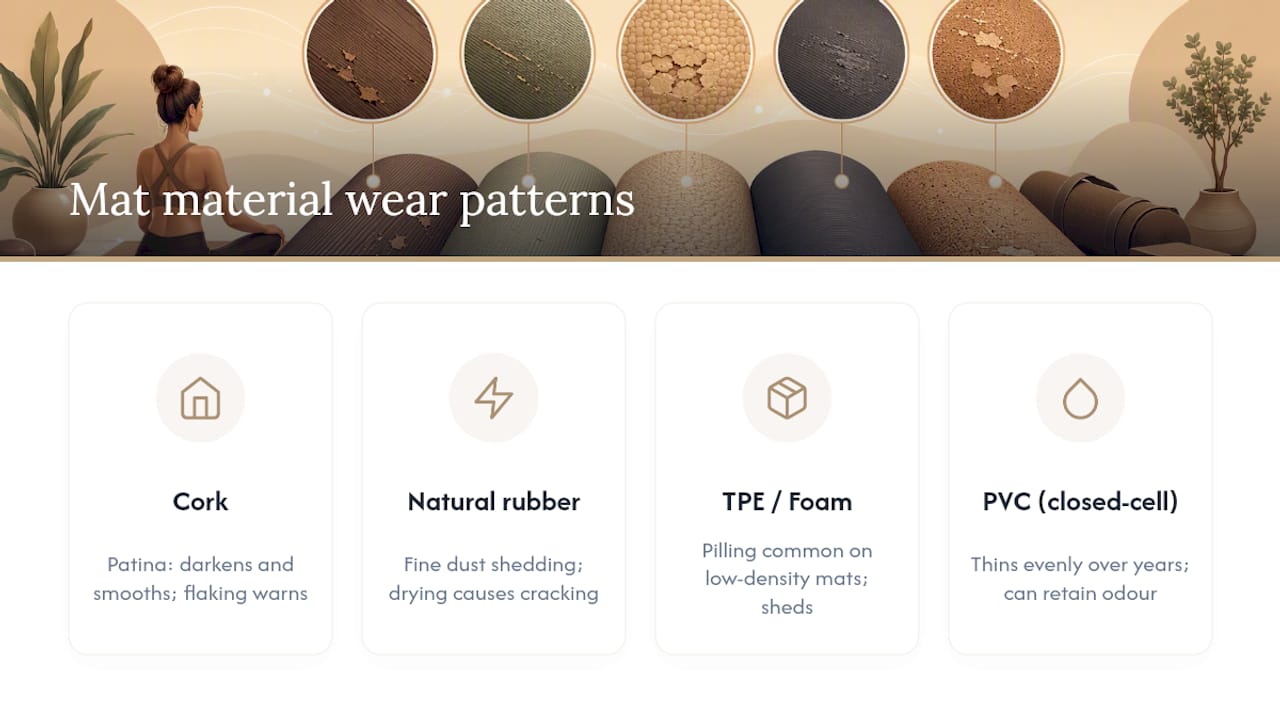
Cork develops what’s best described as a patina. The surface darkens slightly and smooths out with use, and that’s completely normal, even desirable. What isn’t normal is chipping, persistent flaking, or the top layer lifting away from the base in sheets. Mild darkening and smoothing on a cork mat is expected, but flaking, bubbling, or corner lifting point to delamination or adhesive failure, which is a structural problem rather than cosmetic wear.
Natural rubber grips beautifully when it’s fresh, but it’s genuinely vulnerable to drying out and oxidizing. Shedding on a rubber mat tends to look like fine dust rather than chunks, sometimes with visible surface cracking in a spiderweb pattern once it’s advanced.
TPE and other foam blends are where pilling shows up most. Budget mats made from low-density foam are disproportionately prone to this kind of breakdown, and starter mats in a budget price range shed far more often than denser, higher-quality mats simply because the material itself can’t hold up to repeated compression and shear.
PVC mats generally resist shedding the best of any material category. Their trade-off shows up differently: they tend to thin out evenly over years of use and can eventually hold onto odours that no amount of wiping fully clears.
The open-cell versus closed-cell distinction matters just as much as the base material. Open-cell surfaces (common on natural rubber) absorb moisture and sweat, which gives you better grip in a hot class but means they need gentler, more frequent cleaning. Closed-cell surfaces like PU sit moisture on top rather than absorbing it, so they’re easier keep to clean and resist smells but less grippy during sweaty practice.
How do you clean a yoga mat without making it worse
The gap between “cleaning your mat” and “destroying your mat” is narrower than most people assume. Get the routine right and you’ll add years to it. Get it wrong and you’ll accelerate the exact problem you’re trying to solve.
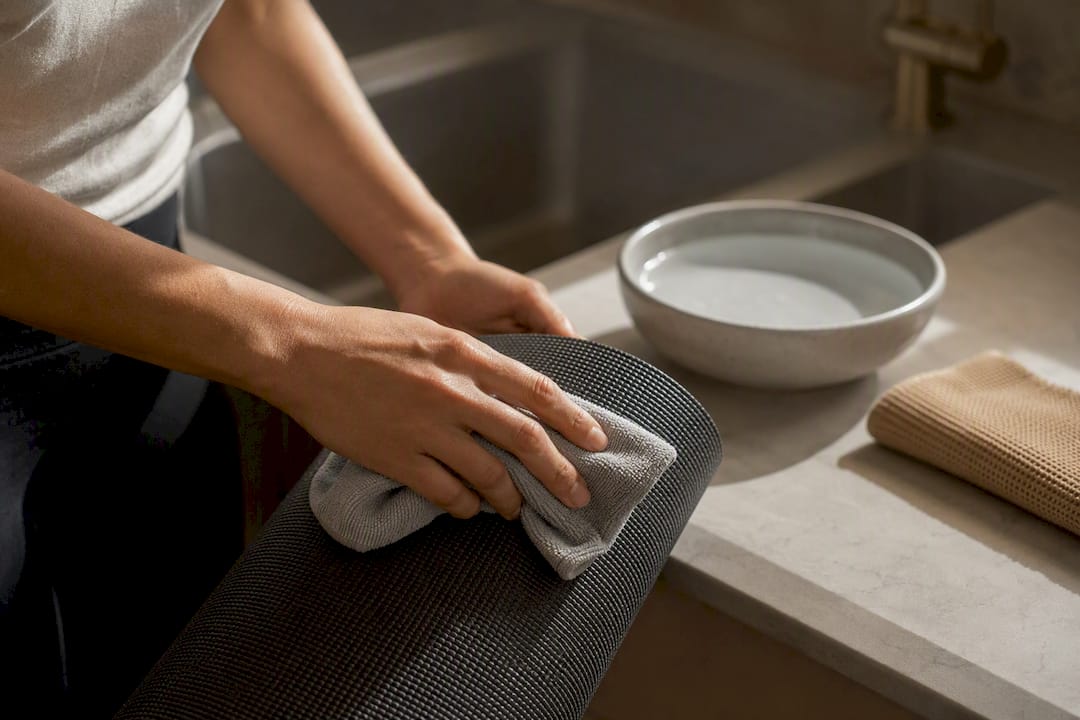
Daily quick-care is simple: a damp cloth with a gentle cleaner wiped over the surface after each session removes sweat and salt buildup before it has a chance to sit and dry into the material.
- Mix plain water with a few drops of a very mild, clear dish soap.
- Lightly spray or mist the surface. Don’t drench it.
- Wipe with a cotton cloth, working in the direction of the mat’s texture.
- Wipe again with a clean, damp cloth to remove any soap residue.
- Lay flat or hang to air-dry completely before rolling.
Deep cleaning should happen roughly once a month, or sooner if you’re practising in hot classes several times a week: it can even be fully submerged after sitting with a cleaner and allowing it to absorb for about 5-10 minutes. Let fully dry which can take up to 12 hours.
Cleaning with plain water and a mild diluted soap or vinegar protects the mat, while pure alcohol and abrasive scrubbing can accelerate surface breakdown. If you need antimicrobial fighting action, make sure to dilute rubbing alcohol, vinegar, essential oils, and avoid bleach, or anything abrasive enough to leave scratch marks. If you're unsure about how to make your own cleaning solution, it is better to buy one that's premade, especially if it's for disinfecting your mat. Alcohol and concentrated oils can dissolve or soften the binders holding the mat’s layers together, which is exactly how a healthy mat starts peeling within weeks to months.
Never machine wash or machine dry a mat unless the manufacturer explicitly says it’s safe. The agitation and heat are far beyond what the material was engineered to survive.
Here’s how to run the actual test that tells you whether a mat is worth saving. Do a full clean using the steps above, then let it dry completely. Repeat that same cycle a second time. Two full rinse-wipe-dry cycles are enough to separate ordinary surface residue from real structural failure. If the surface still feels slick after both cycles, or if flakes are showing up repeatedly, that’s not a cleaning problem anymore.
Pro Tip: When your mat is on its last set of legs, use a yoga towel for hot or high-intensity classes. It absorbs the sweat and friction that would otherwise hit the mat directly, and it buys you time to plan a replacement without giving up your regular practice.
A towel or thin protective layer is a completely reasonable interim solution while you’re deciding whether a mat needs replacing. It’s not a permanent fix for a mat that’s actively delaminating, but it will allow you to continue practicing.
How to prevent yoga mat shedding
Prevention is almost entirely about limiting the two things that break mats down: unmanaged moisture and unmanaged heat.
Let your mat air-dry completely before you roll it up. Rolling a damp mat traps moisture right against the binder layer, which is one of the fastest ways to accelerate delamination on any material. Store it somewhere cool and dark rather than a car trunk, a sunny windowsill, or right next to a radiator. Storing a mat away from direct heat and UV exposure meaningfully slows the ageing process, especially for porous natural rubber mats, and it costs nothing beyond picking a better spot with airflow.
A few other habits go a long way:
- Use a towel over the mat during hot yoga or particularly sweaty sessions, especially when using natural rubber mat surfaces
- Skip lotions, sunscreens, or essential oils before you practise, since they soak into the surface and weaken it from the inside
- Roll the mat with the top surface facing out, which reduces creasing and pressure on the grip layer
- Wipe it down after every session, and run a full deep clean monthly, or every couple of weeks if you’re practising every day
All of these great habits won't take more than 1-10 minutes of work. The mats that last three or four years and the ones that shed within six months usually are different in quality and in how they were treated. Another way to keep a mat lasting longer is to only use it indoors, since using a mat outside one time is enough to cause permanent damage.
Cosmetic wear or structural failure? How to know when to replace your mat
Not every mark on your mat is a problem. Learning the difference between normal ageing and actual failure saves you from either tossing a perfectly good mat too early or practising on one that’s no longer safe.
Cosmetic wear looks like even smoothing across the surface, a slight darkening in high-traffic spots, and a texture that feels a little different than it did on day one. This is completely normal and doesn’t affect performance or safety.
Structural red flags look different, and they tend to show up together rather than in isolation:
- Flakes or crumbs that keep appearing even after a proper clean and dry
- Visible mesh or backing material showing through the top layer
- Bubbles or bulges anywhere on the surface
- Edges lifting or peeling away from the base
- A surface that stays slick no matter how many times you clean it, keep in mind that if you've used a soap-based cleaner, you may just need to thoroughly rinse your mat.
- A persistent odour that survives multiple deep cleans
Most standard mats usually need replacing after about one to two years of regular use, while premium, high-density mats can last considerably longer before thinning, odour, or shedding force the issue. Frequency of practice matters as much as the calendar. A mat used daily in hot yoga will show its age far sooner than one used twice a week in a cool studio.
Pro tip: Another trick to keeping your mat surface looking beautiful is to thoroughly wash your hands and feet before stepping on your mat, since these pressure points press hard down on the surface and even a small amount of dirt can easily leave stains that may be difficult, if not impossible to get out.
Quick fixes and short-term mitigation
If your mat is shedding but you’re not ready to replace it today, a few low-effort steps buy you time without making the problem worse.
Lay a thick towel or an old, unused mat over the top of the shedding one to create a protective barrier between your skin and the crumbling surface. This won’t fix the underlying issue, but it stops flakes from ending up on your hands and feet mid-practice.
Resist the urge to trim off a peeling edge or sand down a rough patch. Both actions expose more raw material to friction and air, which speeds up the breakdown rather than slowing it. It’s a natural instinct, but it works against you here.
If your mat is shedding on a hard floor and you’re also losing traction underneath it, a non-slip rug placed beneath the mat can restore some stability while you sort out a permanent solution.
- Use a towel layer for the sessions you can’t skip
- Never sand, trim, or cut away flaking sections
- Add a non-slip rug underneath if the mat is sliding on the floor
- Stop using the mat entirely once you see mesh, bubbling, or backing material through the surface
Pro Tip: If you’re travelling and don’t want to bring a shedding mat, most studios rent mats for a few dollars a class. It’s a cheap way to keep practising while your replacement is on the way.
Once a mat reaches the point of visible backing or persistent bubbling, mitigation stops being useful. That’s a safety issue, since grip and cushioning both fail right when you need them most.
What Crk knows about cork and natural rubber durability
Cork and recycled natural rubber behave differently than synthetic foams, and understanding that difference is the whole point of caring for a mat properly instead of guessing. Care guidance lines up with the cleaning routine already covered here: water and a diluted vinegar or soap, and not harsh acidic solutions or oil-based sprays, and full air-drying before rolling.
Cork’s surface is naturally antimicrobial and develops a patina (darkened high contact area) with use rather than pilling or crumbling the way low-density foam does. That patina, that aesthetic change at contact points, does not impact performance. Flaking, bubbling, or lifting at the edges is a different story entirely and points to a bonding issue between layers rather than normal ageing.
Our Magic Spray™ Removes Patina (Cork Mat Stains):
Products like Crk’s Organic Magic Spray are formulated specifically to be safe on natural rubber surfaces and to be used occasionally on cork surfaces for removing stains, patina, and for the deepest clean. While Crk's Magic Spray is highly effective for removing patina, you'll have to fully rinse off your mat afterwards so that it doesn't impact grip, and fully removes any dislodged dirt and debris. The trick to removing the patina is to rub it into the cork mat surface, dislodging any dirt or debris, which is also why you should not overuse it, as rubbing can wear out the fabric.
A few things worth knowing about the construction itself:
- Recycled natural rubber provides the base cushioning and grip layer beneath the cork surface
- The bond between cork and rubber layers is the part most vulnerable to heat and prolonged moisture exposure
- Blocks made from the same organic cork, like the Crk Block, age the same predictable way as a cork mat and benefit from the identical care routine
- Rotating which accessories you use across a session reduces the concentrated wear that speeds up shedding on any single piece of gear
Treating a cork and rubber mat with the same care as its accessories keeps the whole practice set ageing at roughly the same pace.
— Crk
Cheap mats, waste, and the real cost of replacing often
A $20 mat that sheds within six months isn’t actually cheap once you factor in how many times you’ll replace it and also the higher levels of toxins that you expose yourself to every time you use it. Buying two or three low-density mats a year generates more waste, more packaging, and more shipping emissions than buying one mat that's built to last and perform well with heavy use.
The more sustainable path usually isn’t the mat that costs the least upfront. It’s the one that survives daily use without ending up in a landfill by summer. When a mat does reach the end of its life, check whether your municipality accepts rubber or cork materials for recycling before tossing it, and consider donating a mat that’s cosmetically worn but structurally sound to a community centre or shelter that runs low-cost classes.
A cork and rubber mat built to resist shedding
Some mats are built from organic cork and recycled natural rubber because that combination resists the friction wear and chemical breakdown that cause most shedding complaints. The cork surface may eventually develop patina but it won't pill, and its antimicrobial properties can mean less odour buildup even after hot, sweaty sessions.
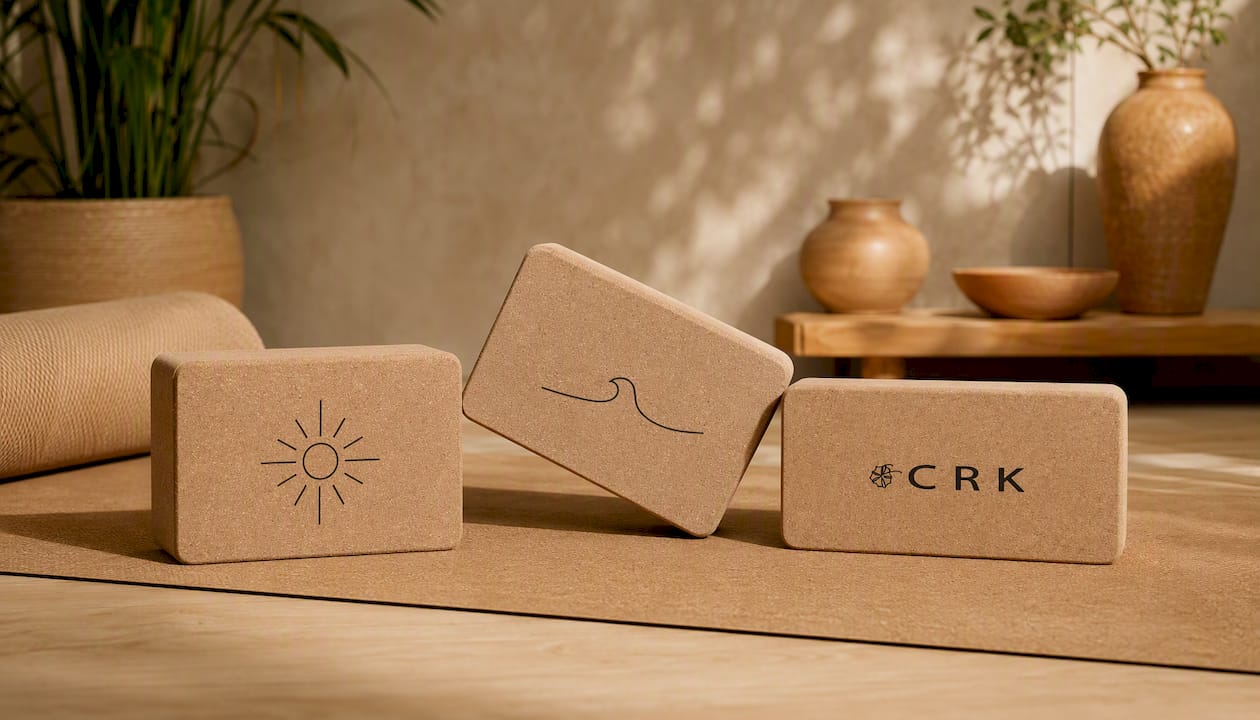
Accessories matter just as much as the mat itself when you’re trying to protect your investment. The Crk Block and the Sun & Wave block are both made from the same organic cork as the mats, built to hold up through the same kind of daily contact and pressure that wears down cheaper foam blocks within a season. For readers who want to stock up while supplies last, the Crk Block liquidation set is available at a reduced price on a final-sale basis.
If your current mat is showing the red flags covered above, visit the Crk Standard Mat product page to compare specifications and care instructions before you decide what to buy next.
Sources
- How to clean a yoga mat: A step-by-step guide
- Why Is My Yoga Mat Shedding? Causes & Easy Solutions
- When should you replace your yoga mat?


