Améliorez votre amplitude de mouvement !
Partager
Saviez-vous que votre mobilité en dit long sur votre état de santé général ? Votre santé, notamment votre capacité à récupérer après une blessure et à prendre soin de vous, est essentielle pour définir des objectifs de remise en forme réalistes et peut avoir un impact majeur sur votre amplitude de mouvement. Sans oublier l’importance de l’exercice physique pour améliorer votre condition physique et votre souplesse.
Gérer les blessures
Malheureusement, un manque de forme physique suffit à augmenter le risque de blessure et à réduire l'amplitude des mouvements. La force musculaire joue un rôle majeur dans la prévention des chutes et la protection des articulations. Cependant, les blessures sont parfois inévitables ! Surtout si vous êtes une personne très active, vous êtes exposé(e) à davantage de situations à risque. Après une blessure, le repos est essentiel. Mieux encore, une bonne nuit de sommeil est primordiale. Pendant le sommeil profond, l'hormone de croissance favorise la réparation des cellules et des tissus endommagés, accélérant ainsi la guérison.
Ensuite, intégrez des mouvements doux et adaptés, car ils peuvent favoriser la guérison en régénérant vos fascias ! Les fascias sont la matrice complexe qui enveloppe tous les organes et les muscles du corps et leur apporte un soutien. Des fascias sains sont mobilisés et étirés régulièrement ; ils peuvent ainsi gagner en souplesse, vous offrant une plus grande amplitude de mouvement, ou au contraire devenir rigides et vous empêchant de bouger librement. Il est important d'en tenir compte pour une récupération à long terme, car les fascias peuvent avoir un impact longtemps après la guérison du reste du corps.
Réduire rapidement l'inflammation
Après une blessure, vous pouvez également cibler l'inflammation articulaire en utilisant des anti-inflammatoires, en vous faisant masser ou même en utilisant un appareil à ultrasons à domicile. Bien que ces solutions soient temporaires, elles peuvent contribuer à réduire l'inflammation et la douleur, qui pourraient sinon vous empêcher de faire les exercices nécessaires à la guérison. Il peut également être utile de réduire l'inflammation dès son apparition, car elle peut parfois devenir chronique si elle n'est pas traitée, limitant davantage la mobilité.
Mangez des aliments complets
Vous serez peut-être surpris de voir comment l'alimentation peut améliorer votre mobilité ! Une mauvaise alimentation peut aggravent l'inflammation articulaire et limitent les mouvements. Les macronutriments présents dans les aliments complets, notamment vitamines Les vitamines E, A, K et D peuvent réduire efficacement cette inflammation . Étant donné que la plupart des aliments que nous consommons aujourd'hui sont transformés (jusqu'à 70 % de notre alimentation quotidienne, selon certaines estimations), il faut faire un réel effort pour intégrer des noix, des graines, des fruits et des légumes non transformés à notre alimentation ! Pensez simplement à éviter les aliments transformés ou contenant des additifs et des conservateurs : c'est un moyen efficace de réduire l'inflammation de vos articulations et d'améliorer votre mobilité.
Observez ce que vous ressentez
Si vous faites déjà régulièrement de l'exercice, mangez beaucoup d'aliments complets et dormez suffisamment, et que vous ressentez toujours des limitations de mobilité, il est possible qu'un problème de santé sous-jacent soit en cause. Certains problèmes de santé ne sont pas toujours évidents et peuvent se manifester de manière indirecte, par exemple au niveau des articulations, de la peau, des cheveux et du niveau d'énergie. Ils peuvent même passer inaperçus chez des personnes qui paraissent en bonne santé et mènent une vie saine. Alors, si vous avez le sentiment que quelque chose ne va pas, écoutez votre intuition et prenez les mesures nécessaires pour identifier le problème. En revanche, si vous vous sentez bien, vous pourriez envisager de renforcer vos muscles !
force musculaire
On associe souvent la souplesse aux étirements, pourtant la force musculaire est un aspect souvent négligé. Le corps humain compte plus de 600 muscles, sans compter les tendons, les ligaments, les articulations et les fascias. La faiblesse musculaire peut entraîner divers problèmes, allant des entorses ligamentaires et tendineuses aux douleurs articulaires et à l'innervation des fascias. Lorsque les muscles sont faibles, le corps se protège en limitant l'amplitude des mouvements.
Des muscles faibles ne peuvent pas soutenir les articulations aussi bien que des muscles forts, et parfois un déséquilibre de la force musculaire peut entraîner une surcompensation d'un muscle par rapport à un autre, ce qui peut provoquer des problèmes articulaires. Un mauvais alignement peut, à la longue, engendrer des frottements et une usure des articulations, aussi appelée arthrite. Le corps étant incroyablement efficace pour se protéger, il peut même être bénéfique de limiter l'amplitude de mouvement jusqu'à ce que votre force soit suffisante.
Limitations de l'amplitude des mouvements chez la plupart des gens
Séance Elle affaiblit nos muscles et pose des problèmes spécifiques. Une étude sur la position assise a révélé que 65 % des élèves souffraient d'une mauvaise posture après le lycée – ce qui nous concerne presque tous ! Lorsque nous sommes assis, nos muscles abdominaux et dorsaux sont fortement sollicités pour nous maintenir droits, tandis que les muscles de nos jambes se relâchent. Ces muscles abdominaux peuvent s'épuiser et se contracter, entraînant inévitablement une mauvaise posture. Ceci provoque une faiblesse du haut du corps et des problèmes de colonne vertébrale. Les muscles des jambes s'affaiblissent également et les ischio-jambiers et les mollets peuvent même se raccourcir avec le temps, du fait de l'immobilisation et de la flexion. Puisqu'une longueur musculaire optimale est nécessaire à la puissance, les muscles raccourcis, qu'ils soient dus à une mauvaise posture ou à une flexion excessive, nécessitent une combinaison d'exercices d'étirement et de renforcement pour être corrigés.
Il existe de nombreuses façons de lutter contre la faiblesse liée à la position assise prolongée. Parmi les méthodes efficaces, on peut citer les étirements des ischio-jambiers et des mollets associés à des fentes. Pour le haut du corps, les postures d'ouverture du cœur, comme la posture du chat-vache et les crunchs, peuvent améliorer la force et même prévenir les douleurs cervicales . Un autre outil très utile consiste à faire des pauses régulières en se levant et en marchant tout au long de la journée. Cela permet d'étirer les jambes et de réaligner la colonne vertébrale.
Limitations de l'amplitude des mouvements chez les athlètes
Si vous êtes un athlète, vous courez un risque accru de développer des déséquilibres musculaires importants. La sursollicitation de certains muscles par des mouvements répétitifs, souvent nécessaires dans le sport, peut perturber l'équilibre corporel. Avec le temps, des tractions inégales exercées par les muscles peuvent apparaître. muscle antagoniste Les paires de doigts entraînent une usure des articulations et un risque accru de blessure. Pour un athlète, la meilleure façon d'améliorer ses performances et de prévenir les blessures est d'intégrer des exercices de renforcement et d'étirement complets, ce qui est nettement plus difficile que pour une personne lambda. Cela implique d'avoir des muscles extrêmement puissants , le reste du corps devant compenser.
Ciblez vos muscles les plus faibles pour augmenter votre amplitude de mouvement.
Le meilleur moyen de cibler les faiblesses musculaires et d'améliorer la souplesse est d'utiliser toute l'amplitude de mouvement de votre corps. C'est le cas dans des sports comme les arts martiaux, le yoga, le Pilates ou la danse, car ces activités sollicitent les muscles dans des mouvements dynamiques qui exigent une synchronisation corporelle importante. Vous identifierez très vite vos limites et les moments où un mouvement devient extrêmement difficile. Si un exercice vous semble difficile, voire impossible, c'est là qu'il faut concentrer vos efforts. Plus vous varierez vos mouvements, mieux vous comprendrez les besoins de votre corps pour optimiser ses performances et développer la force nécessaire à une plus grande amplitude de mouvement.
Et le yoga, alors ?
Yoga Le yoga est un mélange exceptionnel d'équilibre, de force et de souplesse ! Les postures d'équilibre, comme la posture de l'arbre, sollicitent les petits muscles stabilisateurs, parfois difficiles à cibler autrement. Les étirements, comme celui des jambes en chien tête en bas, permettent aux muscles raccourcis de retrouver leur longueur optimale pour une meilleure puissance. Les exercices de renforcement, comme le chaturanga, contribuent à développer une force globale accrue. Mais le plus grand atout du yoga est son accessibilité : quel que soit votre niveau, vous trouverez des variantes pour progresser à votre rythme !
Pratiquez le yoga avec Crk
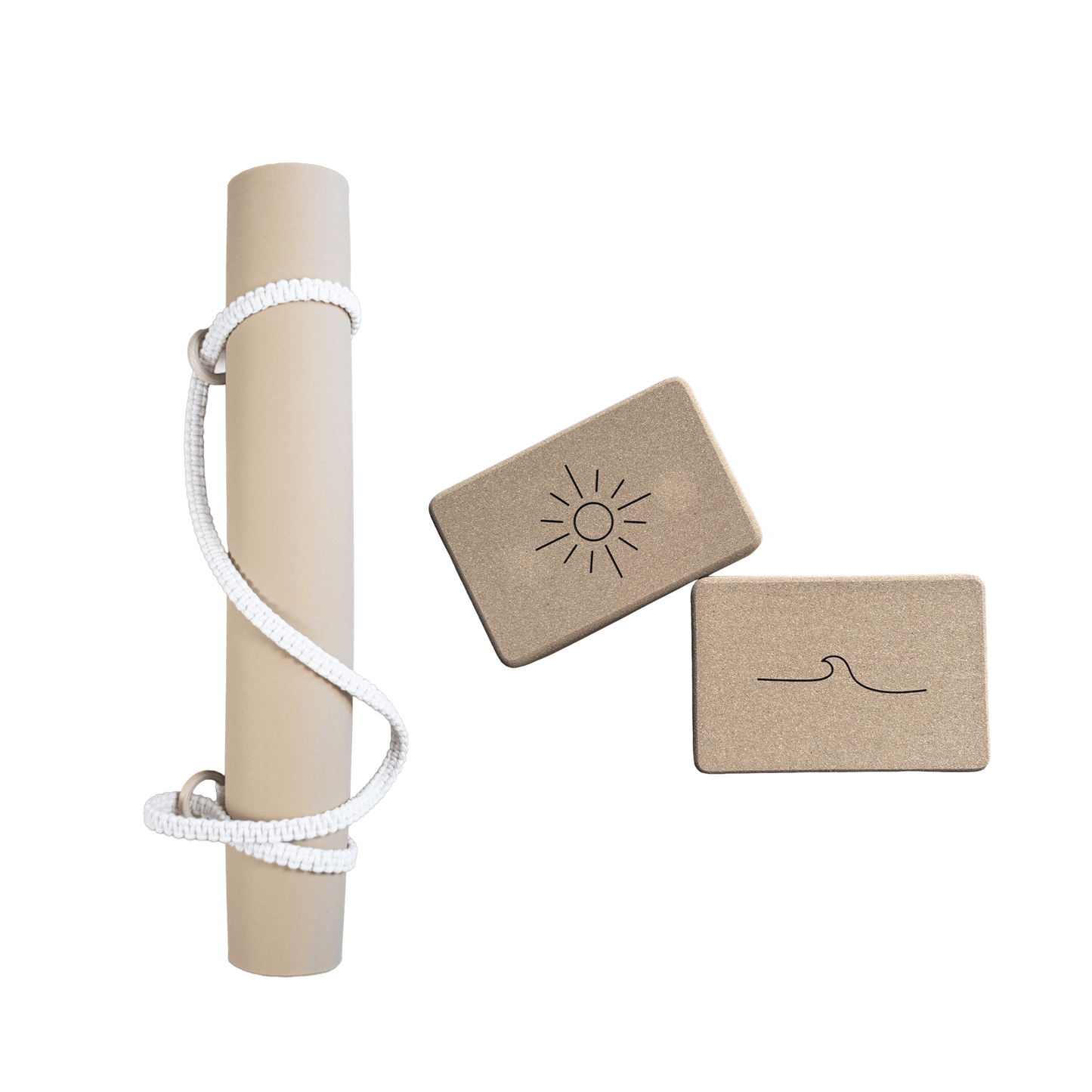
Si vous débutez en yoga, le meilleur endroit pour commencer est Crk Yoga. Les kits comprennent un tapis, un ensemble de blocs et une sangle de transport. Tous les tapis de yoga proposés sont fabriqués à partir de matériaux naturels comme le liège et le caoutchouc naturel, et sont certifiés SGS. Crk propose également des vidéos gratuites de yoga et de pilates. pour que vous puissiez commencer dans le confort de votre propre maison ! 💪🧘