
Make Recycling a Yoga Mat Practical: Choose 4mm Cork + Recycled Rubber
For most eco-minded yogis, the best low-waste option is a cork practice surface bonded to a plant-based base like natural or recycled natural rubber. Cork grips better the more you sweat, natural rubber may eventually biodegrade, and SGS-certified cork and recycled natural rubber mats fit that exact profile because it is made to the highest level of product standards and uses minimal chemicals to vulcanize the rubber.
TL;DR:
- Cork surfaces improve grip as they get even slightly damp or humid, making them ideal for hot yoga and heavy sweating conditions.
- Natural rubber offers durability and may eventually biodegrade whereas other yoga mat bases can never biodegrade, but contains latex which rarely causes allergies and weighs more than TPE plastic mats.
- TPE mats are lightweight, latex-free, but they have higher levels of chemicals that you may get exposed to during your practice, especially after wear and tear of your mat and heat exposure. and that are released into the environment during manufacturing. TPE also resist biodegrading and stay in landfills emitting microplastics that also get into the air, food, and water, causing widespread illness like hormonal imbalance and cancer.
- Regular cleaning with a gentle disinfectant spray, and avoid using outside where dirt and debris easily lodges into the cork mat surface extends the lifespan of cork and rubber mats. It is also recommended to thoroughly wash your hands and feet every time before using a cork mat.
- Confirming material specifics and choosing mats based on actual practice conditions ensures better performance and value.
Table of Contents
- What material should you look for to recycle your yoga mat?
- Does cork and recycled rubber actually improve grip and reduce odour?
- How do you choose the right eco-friendly mat for your practice?
- How do you clean and extend the life of a cork or rubber mat?
- A yogi’s honest experience switching to cork and recycled rubber
- Try Crk’s cork and recycled rubber mats
- Sources
What material should you look for to recycle your yoga mat?
Cork, natural rubber, and TPE each solve a different problem, and none of them behave the way most shoppers assume.
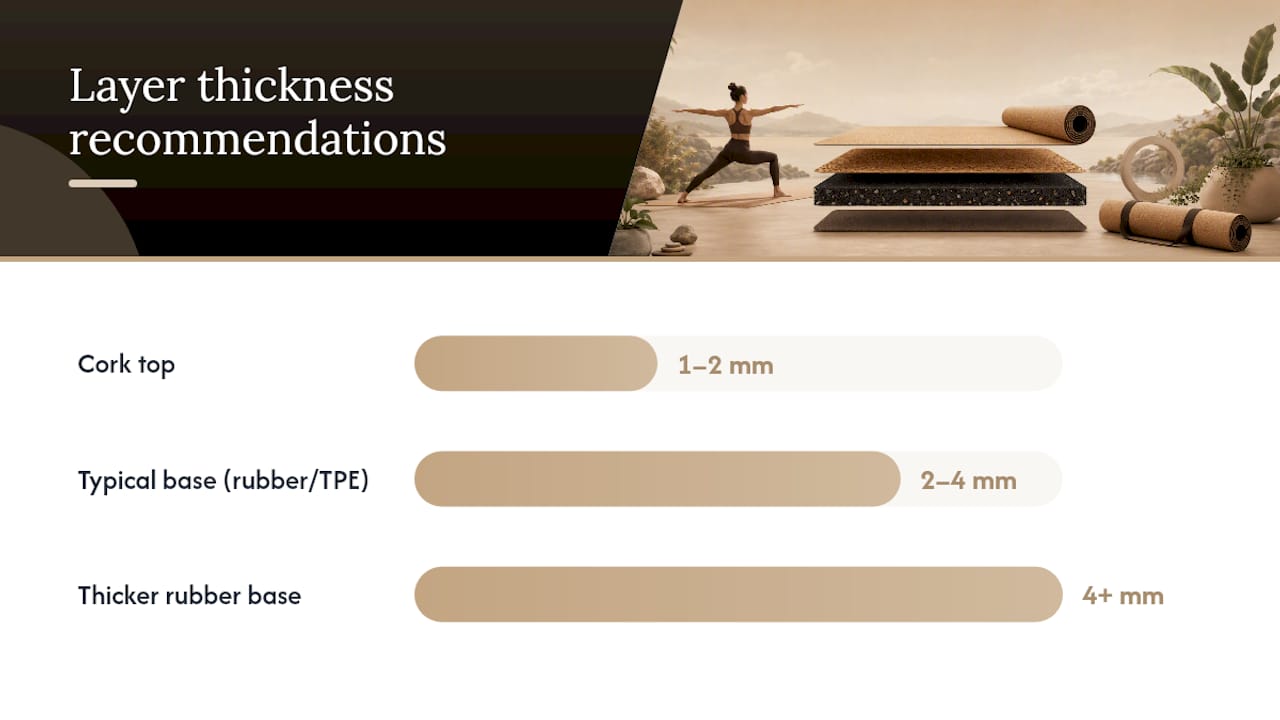
Cork works as a top layer bonded to a base, usually 1 to 2 millimetres of cork over 2 to 4 millimetres of rubber or TPE. Cork contains a natural substance called suberin, and that’s why the surface grips better once it gets damp instead of turning slick like foam does. Cork is also naturally antimicrobial, and it’s harvested from the bark of cork oak trees without cutting them down, so the raw material regenerates on the same tree for decades.
Natural rubber can also be used for hot yoga when it is designed with a grip surface however, it grip will give out before a cork mat ever does during a very sweaty practice, especially on the hands and feet. It holds up over years of practice, and stays cleaner for longer when paired with a cork surface since cork does not hold onto moisture. It’s significantly heavier than foam or TPE, and it’s made from plant latex, which may eventually biodegrade in ideal conditions and temperatures, especially when SGS-certified. The catch: rubber contains latex proteins, so it may irritate those with a latex allergy.
TPE (thermoplastic elastomer) is the lightest of the three and usually latex-free, which makes it an option when rubber is completely off the table for health reasons, like allergies in some. Keep in mind that it doesn’t break down the way cork or natural rubber does once it’s in a landfill, so the eco trade-off is real: you gain allergy safety and lower weight, but you give up biodegradability. And while a reputable, high quality TPE can come without some of the more worrying chemicals, like phthalates, it's still going to breakdown releasing microplastics and under some conditions, VOC's, which both carries health risks. Manufacturing of TPE plastics also emits high levels of pollution and contributes to global warming, since it's made with fossil fuels.
Here’s how the three stack up against common priorities:
- Hot yoga or heavy sweating, especially of the hands and feet: cork top layer. Grip improves as humidity goes up.
- Frequent travel or commuting: thinner natural rubber mat, like 3mm or less will be lighter and a high quality one still uses high density rubber for support.
- Joint support and cushioning: high density natural rubber base (4mm or more) absorbs impact better than TPE.
- Latex allergy: cork top with a TPE or non-rubber base.
- Maximum eco priority: cork, natural rubber or hemp, since they expose you and the environment to minimal chemicals and are high quality materials.
If you only remember one thing from this section, remember that cork’s damp-grip behaviour is the opposite of what most synthetic mats do, and that has led to their rising fame among eco-forward mat reviews.
Does cork and recycled rubber actually improve grip and reduce odour?
Mats built around organic cork tops bonded to recycled natural rubber bases address specific problems yogis run into with standard PVC mats.
- Organic cork top layer: grips better as you sweat, instead of getting slippery.
- Recycled natural rubber base: stable footing, added cushioning, and a lower-impact production footprint than synthetic rubber.
- Antimicrobial surface: cork and hemp resists bacteria and mould growth naturally, which is part of why these surfaces lead to mats that feel clean.
- Alignment guide markings: printed reference lines to improves full body symmetry without the guessing.
- Reduced odour over time: less reliance on synthetic foam that traps sweat and off-gasses.
Here’s what that means on your mat, not just on a spec sheet. A hot yoga class that used to leave your PVC mat slick and smelling by week three is exactly where cork’s damp-grip advantage shows up, often letting you skip the towel layer entirely. The alignment markings solve a different, quieter problem: most people drift out of alignment during a flow and don’t notice until their wrists ache or they have actual muscular imbalances over time. Antimicrobial cork, plus a wipe-down after class means you’re mat feels clean with each use and resists bad smalls.
Independent lab certifications and third-party durability testing for cork-rubber blends are still catching up to demand, so treat brand claims as a starting points and also verify buyer reviews from reputable review sources like TrustPilot and Amazon.
Pro Tip: Test grip barefoot by doing a full 5-minute flow on your yoga mat before making your purchase. If your hands run on the naturally dryer side, you might consider a natural rubber mat surface over a cork mat, since cork requires the hands to perspire ever so slightly for grip to kick in. Just don't write off a cork yoga mat if your hands are very cold and dry, and you've only tried a 5-second downward dog, since this isn't enough to know if a cork mat is right for you!
How do you choose the right eco-friendly mat for your practice?
Match the mat to how you actually practise, not to what looks best on a product photo. Work through this order:
- Assess your sweat level and setting. If you're thinking of getting a cork mat, ask yourself if you've ever experienced clammy hands or felt that your hands were sweaty during sports. If the answer is no, a cork mat is not right for you because you won't get any grip. If your hands are naturally dryer, consider getting a natural rubber mat that is designed for hot yoga or a high grip PU surface.
- Factor in how often you travel with it. While you may be able to withstand carrying around a 6lb mat with a very good yoga mat carrying strap for longer distances, avoid anything that's heavier than that. If you are actually travelling and are worried about transporting your mat, only consider mats that are 5lbs or less, also with a very good carrying strap or bag. Also consider the specs and for travels, consider a less wide mat since it will feel more compact and easier to move around with than a very wide and spacious mat.
- Check joint sensitivity. Bad knees or wrists usually need 4mm or thicker cushioning, and you might even consider keeping a spare towel or blanket handy for certain longer holds like in yin yoga.
- Read the specs to know exactly what materials are in your mat. Vague listings that leave out any materials or say information is proprietary are major red flags. Any honest and reputable company will share the materials that you will be exposed to during your practice.
- Confirm latex status if you have any sensitivity. Ask directly whether the base is natural rubber (contains latex) or TPE (typically latex-free), since cork tops themselves are latex-free but may not provide enough barrier between you and the latex to avoid allergy symptoms.
- Look for a real return or trial window. Grip feel is highly personal, and no online description replaces 20 minutes of actual practice. Ideally, you can also rent or borrow different mats from studios that you are visiting, or even a friend to help you decide what is the best mat for you before ever making a purchase.
Natural rubber’s biodegradation depends heavily on how its made, so confirm that it is SGS-certified and made with minimal chemicals and keep in mind that ideal conditions may still need to exist before it ever biodegrades. Other materials like synthetic rubber and plastic, or ever highly processed natural rubber, will exist in landfills for hundreds of years, That’s the gap between marketing and reality: a mat that’s biodegradable in theory does nothing for the planet sitting in a landfill.
On certifications, be skeptical of vague “eco-friendly” labels with no material breakdown behind them. Trust reviews, since these are actual people who'v bought the mat and can verify whether the mat smelled, which is a great and reliable indicator of chemical composition. Also, consider the price since eco-friendly and high quality materials are expensive and cannot be sold for less than a premium price, like $100+ for a company to stay in business.
How do you clean and extend the life of a cork or rubber mat?
Cork and rubber mats reward a bit of care, and skipping it is the fastest way to shorten a mat’s working life.
For regular cleaning, wipe both cork and rubber surfaces with a damp cloth and a diluted disinfectant cleaner like vinegar, then let the mat air dry flat. Direct sunlight does have natural cleaning properties as well but avoid leaving your cork mat outside under the sun all day, since UV can break down outermost cell layers.
- Roll the mat loosely rather than folding it, to avoid creasing the cork layer.
- Store it flat or loosely rolled in a cool, dry spot, not compressed in a hot car trunk.
- Watch for flaking cork, permanent creasing, or a base that’s gone tacky and won’t clean up, all signs it’s time to replace the mat.
- Natural rubber’s porous, open-cell structure can absorb sweat, so you can even clean the base of your cork and rubber mat if it was a very sweaty session.
Pro Tip: Cut a worn-out mat into smaller pieces for kneeling pads, drawer liners, or garden kneelers instead of tossing the whole thing, since most municipal recycling streams don’t accept intact yoga mats anyway.
On end-of-life, be realistic. Claims that a mat is “recyclable” are often theoretical, because most municipal programs or even advanced recycling facilities don’t take whole yoga mats, and a cork-and-rubber mat is a bonded hybrid, so true biodegradability depends on separating the layers, which is incredibly difficult to do. The best you can do is consider that your mat was manufactured responsibly, created minimal pollution, used natural materials, and that you used it for its entire lifespan. If you find a mat that's been made with some recycled content, this's already a big win. Buying for durability beats buying for a recycling promise that may never get used.
A yogi’s honest experience switching to cork and recycled rubber
The first thing you notice with a cork top is how it behaves in a heated room. Grip that used to fade by the second sun salutation instead holds, sometimes gets better, as sweat builds. Odour was the second surprise: no more musty smell creeping in after a few weeks of hot classes.
The trade-offs are real too. Cork-and-rubber mats sit heavier in a bag than a foam travel mat, and the cushioning feels firmer underfoot, which some knees appreciate and others need a week to adjust to. If you’re weighing those factors for your own practice, the checklist above is the place to work through them.
— Crk
Try Crk’s cork and recycled rubber mats
Everything in this guide points toward one construction: an organic cork top bonded to a plant-based base, built for grip that improves with sweat and a lighter footprint than TPE or PVC. Some product lineups follow that exact formula, and mats typically measure 4mm thick with organic cork over recycled natural rubber.
Three SKUs are currently available at liquidation pricing, final sale: The Sun Mat, The Wave Mat, and The Moon Mat. Each carries the same cork and recycled rubber construction discussed throughout this guide, just in a different surface pattern, so pick based on look rather than performance differences between the three.
Since final sale pricing means no returns on these specific listings, check the sizing and thickness details, and reviews on each product carefully before you order. If none of the current liquidation SKUs match what you need, the full catalogue at Crk carries the same cork and recycled rubber construction across other mat styles.
Sources
- Cork yoga mats: full review & comparison — International Yoga Conference
- Natural rubber yoga mat: material science & performance guide — Ming Yoga Mat
- Flexa


