
2–9+ lb Yoga Mat Weight: Pick the Right Mat for Travel, Studio, Home
Most ultra-light travel mats weigh 2–3 lb, luxury travel mats for resort stays weight 4-5 lb, and standard mats weight 6 lb, and heavy-duty mats climb to 7–9+ lb. Choose based on how often you carry your mat versus how much cushioning your joints need. A 3–6 mm thickness hits the sweet spot for most people who want a mat that rolls into a bag without feeling like a yoga towel underfoot.
TL;DR:
- Carrying frequency and practice environment determine the ideal yoga mat weight, with 2–3 lb for travel, 4–6 lb for studio, and heavier for home use.
- Thickness influences weight primarily through material volume and density, with natural rubber and layered constructions increasing overall weight compared to foam.
- Grip and durability are impacted more by surface material and texture than by weight, making targeted material choice more important than overall mass.
- Comparing actual mat weights requires checking size, material, and whether packaging is included, as specs can vary widely between brands and models.
- Mid-weight natural material mats (around 3–5 mm) offer the best balance of portability, grip, and longevity for most practitioners.
Table of Contents
- Practical yoga mat weight ranges and what they mean day to day
- What actually determines a mat’s finished weight?
- The real trade-off: cushioning and stability versus weight
- Which mat weight fits your practice?
- How material choice changes weight, grip, and durability
- How to compare published mat weights accurately
- How Crk balances weight, grip, and sustainability
- Why we think mid-weight eco mats win for most people
- Find the Crk mat that matches your practice
- Sources
Practical yoga mat weight ranges and what they mean day to day
Yoga mat weight isn’t a spec you check once and forget. It changes how your practice actually feels, from the walk to the studio to the way your knees feel after an hour of yoga practice.
Lightweight travel mats typically land at 2–3 lb. These roll tight and they may slide into a backpack side pocket. The trade is thinness, especially for a travel mat made of natural rubber which is naturally heavier and therefore must be thinner. Most serious travel mats sit around 2–3 mm, so you’ll feel plenty of floor through your palms and knees.
Standard portable mats are the default for a reason. At 4–6 lb, they strike the most common compromise between carrying ease and cushioning. You can still sling one over your shoulder for a few blocks without your arm complaining, and there’s enough material underfoot to soften a yin yoga stretching practice.
Heavyweight mats run 7 lb and up and offer extra-large, ultra-supportive cushioning for sensitive joints. These stay home. They’re built for people who roll out on hardwood and want serious joint protection and comfort, not for anyone commuting to a studio three times a week.
A few things push weight higher than the thickness alone suggests:
- XL and wide-body mats add length and width, which multiplies total mass even at the same thickness.
- Double-layer or bonded constructions stack material densities, so a “medium” mat can weigh like a heavy one.
- Natural rubber tends to weigh more per millimetre than foamed synthetics.
If you’re moving your over a large distance, that one pound of difference between a 5 lb and a 6 lb mat adds up fast and makes a significant impact on comfort and portability.
What actually determines a mat’s finished weight?
Thickness gets blamed for weight more than it deserves. It’s one input among several, and the others often matter more.
- Thickness adds material volume. A 6 mm mat has roughly twice the material of a 3 mm mat at the same footprint, but that’s only half the story.
- Density sets the mass per unit of that volume. A dense natural rubber compound packs more mass into the same millimetre of thickness than a foamed TPE blend does. High density will also provide more joint protection than soft foam that may bring you closer to the floor.
- Surface area scales everything. A 72-inch mat weighs less than an 84-inch version of the identical material and thickness, simply because there’s more surface area.
- Layered builds compound unpredictably. Different layers carry different densities, so a mat with a grippy top layer bonded to a cushioned base can land heavier or lighter than a single-material mat of the same total thickness.
- Coatings and alignment prints add trace weight. Rarely enough to notice, but enough that spec sheets sometimes round differently between otherwise similar mats.
That’s why two 4 mm mats from different brands can weigh noticeably different amounts. One might use a lightweight foamed core; another might use a dense natural rubber slab. Thickness tells you very little about what you'll actually feel in your gym bag.
The real trade-off: cushioning and stability versus weight
Here’s where most buying advice oversimplifies things. Heavier, thicker mats cushion knees and wrists better, which matters if you’re doing a lot of floor work or have joint sensitivity. But that same thickness can reduce your ability to feel the floor during balance poses, since a plush surface muddies the proprioceptive feedback your feet and hands rely on.
Weight itself isn’t the deciding factor in how a mat performs, though. Grip depends almost entirely on surface material and texture, not total mass. A dense, textured rubber top layer grips better than a smooth foam surface of the same weight, especially with sweat.
A few other factors shape how a mat “feels” beyond the number on the scale:
- Edge curl on cheaper foam mats worsens over time and undermines stability regardless of weight.
- Material memory determines whether a mat springs back flat after rolling or stays creased.
- Surface texture (embossed, ridged, or smooth) drives grip more than density does.
- Compression set affects whether cushioning holds up after months of practice or flattens out.
Pro Tip: If you love a lighter, thinner mat for portability but your knees protest during floor poses, you can also fold your mat without adding bulk to your everyday carry. Keep in mind that the more you practice, the stronger your joints will become and the less thickness you will require over time.
If your mat feels unstable during standing balance work, it may be too thick and soft, typically TPE or PVC mats. Look for high density materials, like natural rubber, in the product description to ensure stability.
Which mat weight fits your practice?
Matching mat weight to how you actually practise saves you from buying twice.
- Travelling regularly: aim for 2–3 lb mat in a packable or foldable build. You’ll feel every ounce after days of long walks, so lighter and thinner is the right call when you're a serious traveler.
- Studio classes or mixed-style practice: 4–6 lb at 3–4 mm thickness covers vinyasa, power yoga, and general flow without punishing your shoulder on the way there.
- Home practice on hardwood or tile, or sensitive joints: go 7 lb and up, or 5–6 mm thick. If you’d rather stay lighter, a foldable 4–6 mm mat gets you most of the cushioning without the bulk. Think, 100% natural rubber.
- Restorative or yin practice: 6–8 mm is worth the extra weight here, if you have extra sensitive joints.
- Hot yoga: weight matters less than surface grip and antimicrobial treatment. A sweaty palm on a slick mat is a bigger problem than an extra pound of carrying weight!
The pattern holds across every use case: decide based on how often the mat travels with you, not on the thickness number printed on the packaging. Someone practising at home four times a week and driving to one studio class has completely different priorities than someone who carries their mat around all day.
How material choice changes weight, grip, and durability
Material family predicts weight tendency better than thickness does, though there’s still real variation within each category.
- Natural rubber runs medium to heavy for its thickness because the compound is dense. In exchange, it grips well and it holds its shape longer than most foams.
- Cork adds surface grip that improves with moisture, which is part of why it’s popular for sweaty practice, and it carries natural antimicrobial properties. Finished weight depends heavily on what backing material it’s bonded to, so a cork mat over a rubber base weighs differently than cork over foam.
- TPE and other foamed materials tend to run lighter, but density varies enough between brands that “TPE” alone tells you little. Some foamed mats are nearly as light as travel mats; others are surprisingly dense.
- PVC and composite builds cover the widest weight range of any category. Read the spec sheet closely, and watch for layered coatings that add weight the base material description doesn’t account for.
None of this means heavier automatically means better grip or longer life. Grip and cushioning behaviour come down to material and construction, not the number on the scale. A well-made lighter mat can outperform a poorly bonded heavy one within a year of regular use.
How to compare published mat weights accurately
Manufacturer weight listings aren’t always apples to apples, so a little verification saves you from a bad surprise at unboxing.
- Match sizes before comparing weights. A 68-inch mat and an 84 inch mat of the same material will never weigh the same, so confirm both listings use identical dimensions.
- Pay attention to the materials. Be skeptical if you see a natural rubber mat that weighs less than 5-6 lb as it is highly unlikely for pure natural rubber to be so lightweight. If you notice a strong chemical smell upon unpacking, it is definitely mixed with some other plastic and chemical materials.
- Check whether the listed weight includes packaging. Some brands quote shipping weight, which inflates the number versus the mat alone.
- Weigh it yourself for a reality check. Step on a bathroom scale holding the mat, note the number, then weigh yourself alone and subtract. Round to the nearest quarter pound for accuracy, and repeat twice if the readings drift.
- Ask customer service when a weight isn’t listed, and request the material density if you’re comparing mats within the same thickness class.
- Watch for marketing rounding. Published figures are reference values, not guarantees, and model revisions or regional variants sometimes ship a few ounces off the listed spec.
How Crk balances weight, grip, and sustainability
Crk builds mats from organic hemp, cork, and natural or recycled natural rubber rather than foamed synthetics, which means our mats sit on the denser end of their thickness class. That’s a deliberate trade. Natural materials add a modest amount of weight over synthetic foam, but they bring grip that improves with sweat instead of degrading, along with antimicrobial properties foam can’t match.
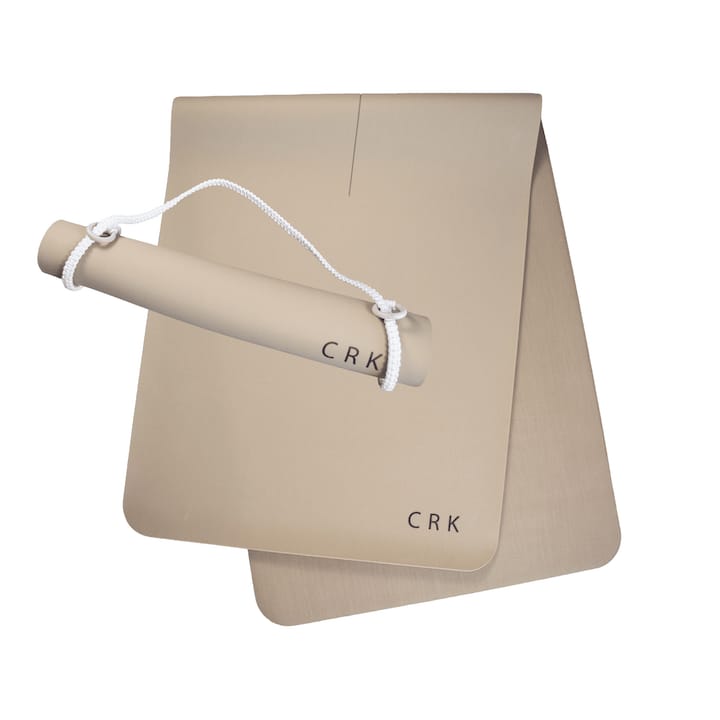
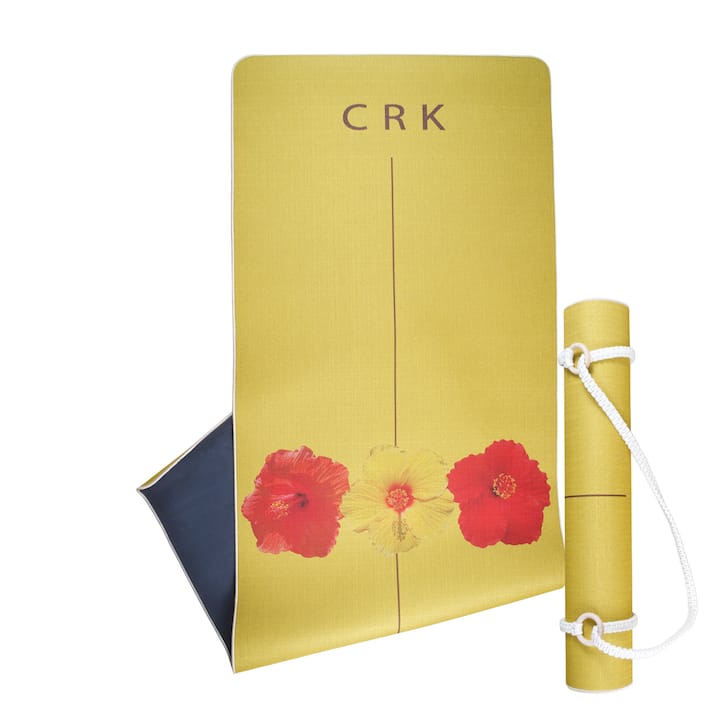
The lineup maps directly to the use cases above. The Classic Mat, at 3 mm and natural rubber, suits travel and light flow work where portability matters most. The Summer Mat, 4 mm with a built-in alignment system and recycled natural rubber, is the daily-practice compromise between cushion and carry weight. The Limited Edition Yellow Mat, at 5 mm organic hemp and natural rubber, targets heavy duty outdoor practice and comfort where the extra pound is worth the functionality.
Why we think mid-weight eco mats win for most people
The yoga world spends a lot of energy debating ultralight versus heavy duty, and we think that framing misses the point. Most practitioners aren’t choosing between extremes. They’re choosing a mat that has to work for a studio class on Tuesday, a living room flow on Thursday, and a weekend trip once a month.
That’s the entire reasoning behind building around 3 to 5 mm natural materials instead of chasing the lightest possible foam or the thickest possible cushion. Weight becomes a design decision tied to grip and durability, not a number to minimize on its own. A very good, non-slip yoga mat carrying strap goes a long way for a mat that runs slightly on the heavier side.
If you can, try a mat in a studio setting before buying, even if it’s not the exact model you’re considering. Feeling how a 4 mm natural rubber surface responds under your palms tells you more than any spec sheet. And if your existing mat is close but not quite right on cushioning, see how folding it feels which closes the gap for a fraction of the cost of replacing the whole mat.
— Crk
Find the Crk mat that matches your practice
Once you know your ideal mat, matching it to an actual weight range takes thirty seconds. If you travel often or want something light enough to forget you’re carrying it, The Classic Mat at 3 mm natural rubber keeps things simple without sacrificing grip and stability. For daily studio practice or a mixed flow routine, The Summer Mat at 4 mm adds an alignment system to the recycled rubber build, useful for anyone still refining pose placement. And if your knees or wrists need more cushion at home, The Flowers Mat at 5 mm organic cork and natural rubber gives you that extra floor buffer without switching to a synthetic foam mat.
Every Crk mat skips the standard TPE and PVC foam approach in favour of natural, organic and recycled materials, so the weight you’re carrying is doing real work: better grip, natural odour resistance, minimal chemical exposure, and a surface that holds up over years of practice instead of months. Check the sizing and thickness details on each product page, then pick the one that matches how you actually practise, not just how you’d like to.
Sources
- Yoga Mat Weight Guide: How Heavy Should a Yoga Mat Be?
- The Best Yoga Mats of 2026 | Tested & Ranked (buying advice)
- Yoga mat guide: choosing the right thickness, grip, and material


