

Yogis: Cork Yoga Mats Improve Practice and Lower Environmental Footprint
Cork mats deliver stronger wet grip, natural antimicrobial protection, and a lower environmental footprint than most synthetic mats. They also hold up longer than basic foam. The trade-off: cork is heavier and firmer, so it suits a home or studio base more than a daily commute, and dry-hand practitioners may need to adjust their setup.
TL;DR:
- Cork mats are ideal for hot yoga and sweaty sessions because their grip improves as moisture increases, reducing slip risk.
- The antimicrobial properties of cork significantly lower odor buildup and bacteria growth, minimizing cleaning requirements over time.
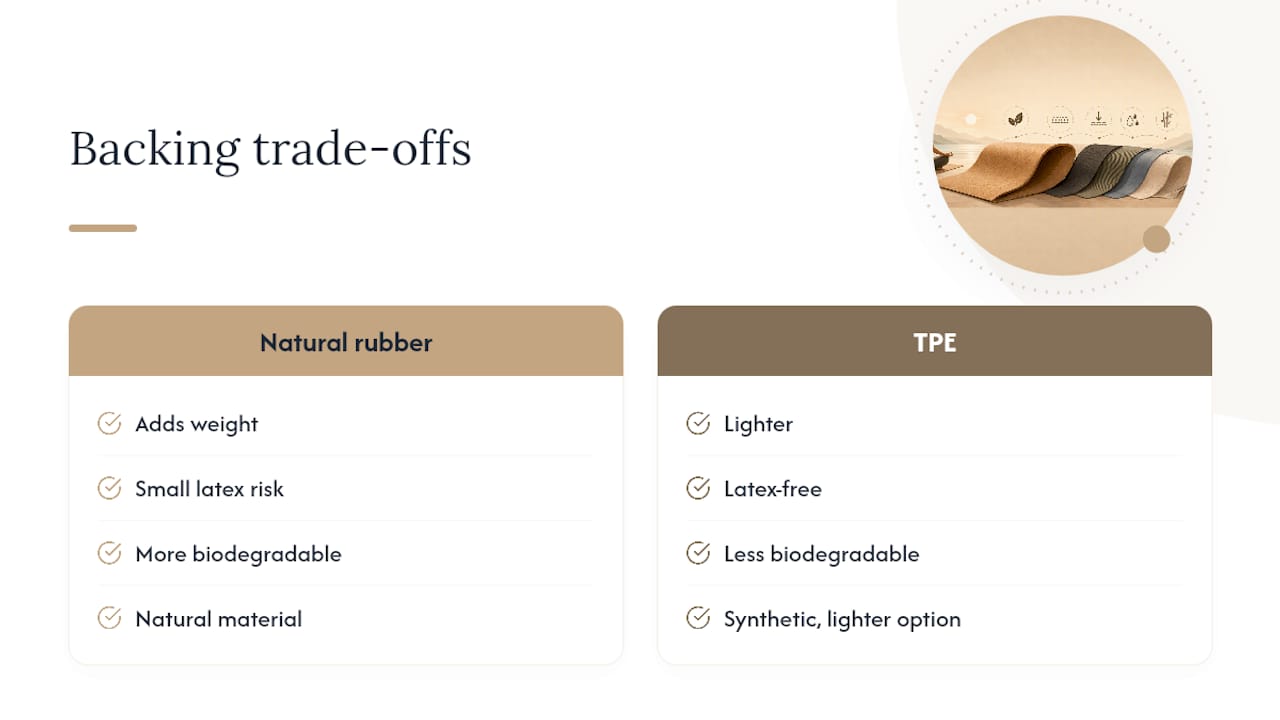
- Choosing natural rubber backing offers full biodegradability but adds weight and potential latex concerns, while TPE backing reduces weight but is less eco-friendly.
- Cork’s durability surpasses foam mats, maintaining texture and thickness through hundreds of sessions, and its firm surface enhances alignment feedback.
- For dry practice or low-sweat sessions, misting the cork surface with water can restore grip in cooler environments.
Table of Contents
- Cork yoga mat benefits at a glance
- Grip and performance in practice
- Hygiene and maintenance
- Environmental benefits and material lifecycle
- Durability, feel, and joint support
- Who cork suits best: a quick buying checklist
- Why cork works: the science and the product side
- What we’d actually tell a friend shopping for one
- Which Crk mat matches your practice
- Sources
- FAQ
Cork yoga mat benefits at a glance
The short version: cork rewards sweat instead of fighting it, and it asks less of you between sessions.
- Moisture-activated grip — the more you sweat, the more traction you get underfoot and under palm.
- Natural antimicrobial resistance — fewer odours, less bacterial buildup, less scrubbing.
- Renewable material — harvested from bark, not clear-cut trees.
- Long-term durability — resists the peeling and compression that wear out foam mats.
- Tactile feedback — a firm, textured surface that gives you a clearer read on your alignment.
Each of those points has a practical reason behind it, and the next few sections break down why they hold up in real practice, not just on a spec sheet.
Grip and performance in practice
Cork behaves backwards from foam and PVC: moisture increases traction instead of destroying it. That happens because of suberin, the waxy substance in cork’s cell walls, combined with cork’s honeycomb-like microstructure, which together create more surface friction as sweat is absorbed into the material rather than sitting on top of it, according to a detailed comparison of cork mat performance.
That property matters most in hot yoga and heavy vinyasa flows, where a foam or PVC mat turns into a hazard the moment your palms start sweating. With cork, the opposite happens. Your hands and feet grip harder as the room heats up, and you can skip the towel most hot-yoga practitioners carry as backup.
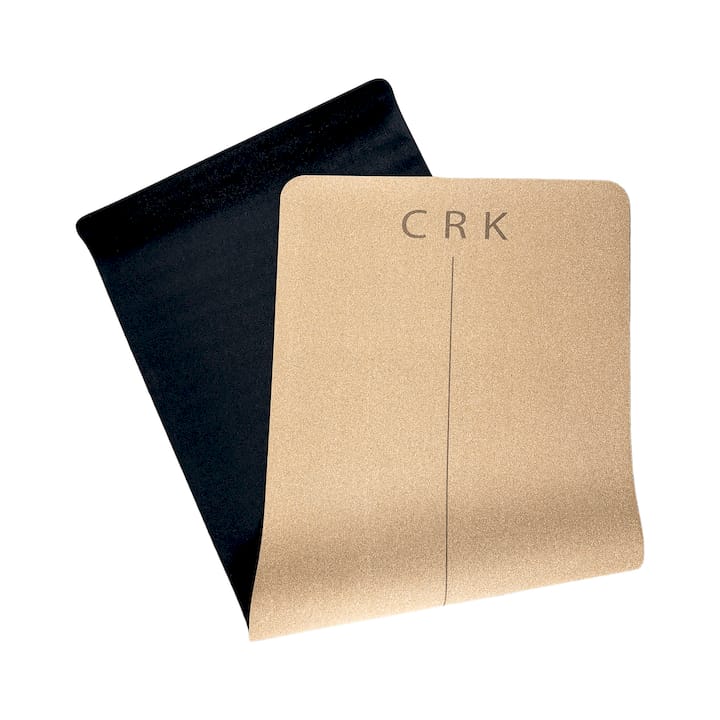
The flip side shows up in low-humidity, low-sweat sessions like restorative or yin, where a bone-dry cork surface can feel faintly slick before your body warms up.
Pro Tip: If your cork mat feels slippery in a cool, dry room, mist your hand and foot zones lightly with water before you start. It restores the grip instantly without needing a towel.
One more detail worth checking before you buy: the backing layer. Natural rubber backing adds weight and carries a small latex risk for sensitive users, while TPE backing is lighter and latex-free but trades off some biodegradability.
Hygiene and maintenance
Cork resists the smell that ruins cheap mats within a few months. The material’s natural antimicrobial properties slow bacterial and fungal growth on the surface, which is why cork mats hold up better against odour than most synthetics over repeated sweaty sessions, per research on cork’s antimicrobial qualities. That translates into less deep-cleaning for both home practitioners and studio owners running the same mats through dozens of classes a week.
Day-to-day care is simple:
- Wipe down with water after most sessions.
- Use a small amount of mild soap only when needed.
- Air dry flat or hung, out of direct sun.
What to avoid matters just as much as what to do. Never soak a cork mat, skip harsh chemical cleaners, and stay away from oil-based sprays, since cork’s care guidelines warn that these can degrade the cork surface and weaken the backing adhesive over time. Prolonged sun exposure has the same effect, drying out the material faster than normal wear would.
Environmental benefits and material lifecycle
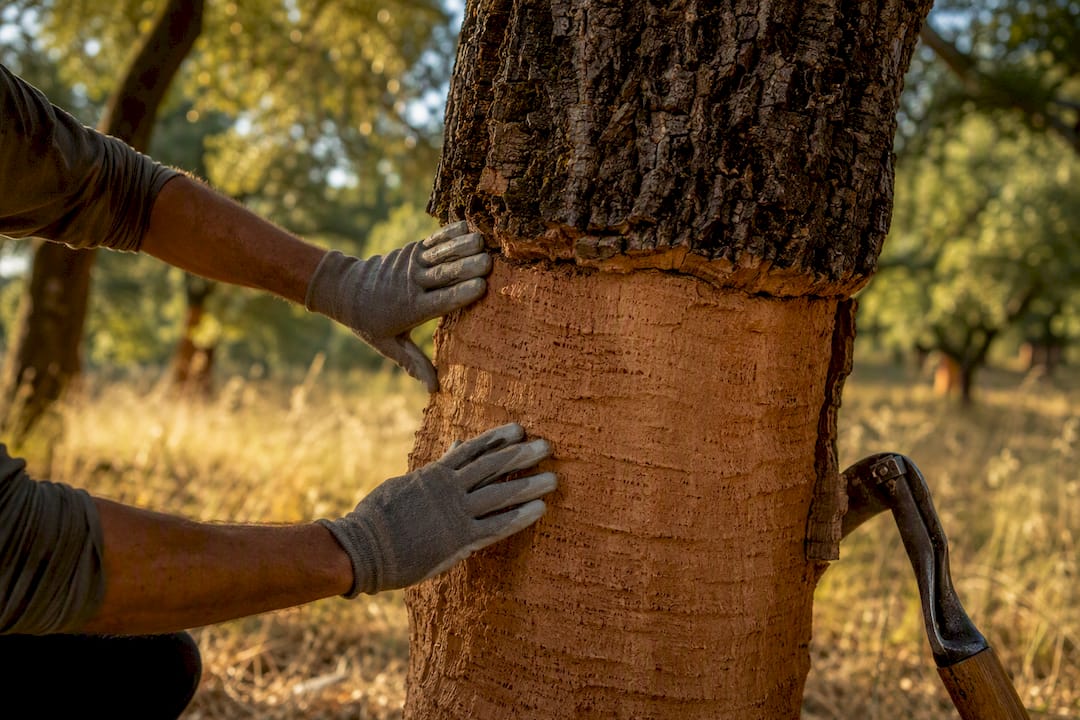
Cork comes from bark, not from the tree itself. Harvesters strip the outer layer of a cork oak without felling it, and the bark regrows on a 9 to 12 year cycle, according to a comparison of cork and rubber yoga mats. That single fact separates cork from PVC and most foam mats, which start as petroleum and require heavier industrial processing to produce.
Cork is also biodegradable at the end of its life, unlike PVC, which can sit in a landfill for generations.
The nuance worth knowing: the backing layer changes the equation. A natural rubber backing keeps the mat closer to fully biodegradable but adds weight and, for some users, a latex concern. A TPE backing solves the latex question and cuts weight, at the cost of some biodegradability. Shipping distance and packaging matter too, though they’re a smaller factor than the raw material choice itself.
Durability, feel, and joint support
A well-made cork mat can outlast several foam mats in the same span of time. Cork resists the peeling and surface compression that eventually flatten cheaper mats, holding its texture and thickness through hundreds of sessions rather than dozens.
Underfoot and under the wrists, cork reads as firmer than foam. That firmness is part of why practitioners report better balance and alignment feedback on cork. The textured, solid surface gives clearer proprioceptive cues than a soft, sinking foam mat, so you feel exactly where your foot or palm is placed instead of guessing through a cushion.
That same firmness is a trade-off for anyone with sensitive knees or wrists. If you kneel often or you’re rehabbing a joint, a thicker cork mat, like a 5mm build, or a folded towel underneath will do more for you than switching materials entirely.
Who cork suits best: a quick buying checklist
Cork earns its place fastest with three kinds of practitioners: hot-yoga and vinyasa regulars who sweat heavily, eco-conscious home practitioners who want to avoid PVC, and studio owners who need mats that survive daily rotation. In wet-grip and odour-resistance comparisons, cork consistently beats PVC and TPE, while natural rubber alone still wins on dry tactile feel and softness, based on material performance testing.
Before you buy, run through this:
- Thickness — 4mm for portability, 5mm for extra cushioning on hard floors.
- Backing material — natural rubber for full biodegradability, TPE if latex is a concern.
- Mat weight — heavier mats stay put but travel poorly; factor in how often you’ll carry it.
- Cleaning routine — confirm you’re comfortable with the wipe-and-air-dry habit cork requires.
If you’re new to structuring a home practice around any mat, beginner-friendly yoga guidance can help you match your routine to the right setup before you commit to gear.
Why cork works: the science and the product side
Suberin and cork’s cellular structure are the reason grip improves with sweat instead of failing under it, a mechanism explained in the same cork mat performance review cited earlier. Some brands build their mats around that property, pairing organic cork with natural or recycled rubber backing and adding an alignment guide system printed into the surface, so the textured grip and the visual alignment cues work together rather than as separate features. Full specifications, thickness options, and backing details are listed on each product page.
What we’d actually tell a friend shopping for one
Cork earns its reputation with sweat, not despite it. For anyone doing hot yoga, vinyasa, or heavy home sessions, that single property outweighs most other spec differences. If you travel constantly or need a plush restorative surface, a lighter foam or thicker rubber mat may serve you better. Otherwise, the product pages are worth a look.
— Crk
Which Crk mat matches your practice
Buying a cork mat usually comes down to how much cushioning you want and how the mat was made, and Crk’s three cork mats cover most of that range without forcing a compromise on grip.
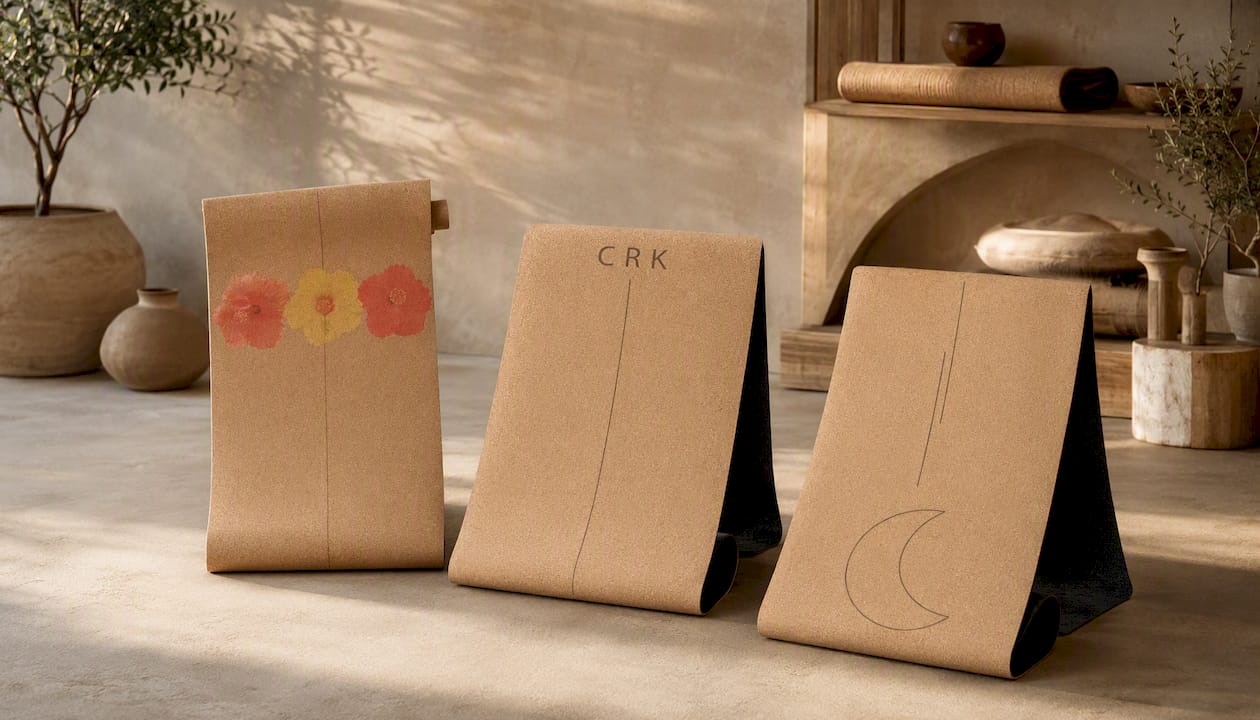
If your knees ask for more padding or you’re setting up a permanent studio spot, the Flowers Mat runs 5mm thick, giving joints extra cushion without losing the moisture-activated grip that makes cork worth choosing in the first place. For most practitioners who want one mat that handles home practice, travel, and hot yoga equally well, the Standard Mat at 4mm is the balance point between portability and stability. If sustainability is the deciding factor and you want the backing material to match that priority, the Moon Mat pairs organic cork with recycled natural rubber, cutting into the biodegradability trade-off other backings carry. Whichever thickness fits your practice, check availability and full specs on the product pages before your next session.
Sources
- Cork yoga mat: full review & comparison
- Cork yoga mat guide (2026): benefits, comparisons & care
- Cork vs rubber yoga mat: which one fits your practice
FAQ
Is a cork mat good for yoga?
Yes, for most practitioners, especially anyone who sweats heavily during practice, since cork grips better as it gets damp rather than becoming slippery.
What is the healthiest material for a yoga mat?
Cork and natural rubber are generally considered the healthiest options because they avoid the PVC and synthetic chemical exposure common in foam mats, while cork adds natural antimicrobial resistance on top.
Which yoga mat is better, cork or rubber?
Cork wins on wet grip and odour resistance, while natural rubber alone offers a softer, more tactile dry-hand feel, so the better choice depends on how much you sweat during practice.
Which material is best for a yoga mat?
There’s no single best material for every practitioner. Cork suits sweaty, hygiene-focused, eco-conscious practice, while natural rubber suits practitioners who prioritize dry-grip softness over moisture-activated traction.
Are Crk’s cork mats good for hot yoga?
Yes. Crk’s cork mats, including the Standard Mat and Flowers Mat, are built specifically around the moisture-activated grip that hot yoga and heavy vinyasa sessions demand.


